
Collection: Shipping & Hazardous Labels | Handling, Hazmat & Lithium Battery Labels
Mark packages, cartons, pallets and regulated shipments with shipping and hazardous labels from Gpack Supplies. This collection includes handling labels, fragile stickers, orientation labels, temperature instructions, hazardous-material class labels, limited-quantity markings and lithium battery labels for warehouse, fulfillment and transportation applications.
Choose from 3" x 5" shipping labels, 4" x 4" hazardous labels and 4.7" x 4.3" lithium battery labels. Available options include Fragile, Handle With Care Glass, This Side Up, Do Not Stack, Refrigerate Upon Arrival, Class 3 Flammable Liquid, Class 4 Flammable Solid, Class 6 Toxic, Class 8 Corrosive, Class 9 Miscellaneous, Limited Quantity Y and UN3090, UN3091, UN3480 and UN3481 battery markings.
High-visibility printed labels help communicate package orientation, handling precautions and shipment information to warehouse personnel and carriers. Select the marking that matches the product, packaging method, transportation mode and current applicable shipping requirements.
Local pickup and fast delivery options available in Miami and Broward.

-
Shipping and Hazardous Labels
Regular price From $17.00 USDRegular price -
Shipping Fragile Labels Please Handle with Care – 3 x 5 – 500 Labels Roll
Regular price $17.00 USDRegular price -
Shipping Labels Please Handle with Care Glass – 3 x 5 – 500 Labels Roll
Regular price $19.00 USDRegular price -
Shipping Labels This Side Up Two Arrows – 3 x 5 – 500 Labels Roll
Regular price $19.00 USDRegular price -
Hazardous Labels Class 6 Toxic – 4 x 4 – 500 Labels Roll
Regular price $21.00 USDRegular price -
Hazardous Labels Class 8 Corrosive – 4 x 4 – 500 Labels Roll
Regular price $21.00 USDRegular price -
Hazardous Labels Class 9 Miscellaneous – 4 x 4 – 500 Labels Roll
Regular price $21.00 USDRegular price -
Hazardous Labels Limited Quantity Y – 4 x 4 – 500 Labels Roll
Regular price $21.00 USDRegular price -
Hazardous Labels Lithium Battery UN3090 – 4.7 x 4.3 – 500 Labels Roll
Regular price $27.00 USDRegular price -
Hazardous Labels Lithium Battery UN3091 – 4.7 x 4.3 – 500 Labels Roll
Regular price $27.00 USDRegular price -
Lithium Battery Labels UN3480 – 4.7 x 4.3 – 500 Roll
Regular price $27.00 USDRegular price -
Lithium Battery Labels UN3481 – 4.7 x 4.3 – 500 Roll
Regular price $27.00 USDRegular price -
Hazardous Labels Class 4 Flammable Solid – 4 x 4 – 500 Labels Roll
Regular price $23.00 USDRegular price -
Hazardous Labels Class 3 Flammable Liquid – 4 x 4 – 500 Labels Roll
Regular price $23.00 USDRegular price -
Shipping Labels Refrigerate Upon Arrival – 3 x 5 – Green – 500 Labels Roll
Regular price $19.00 USDRegular price -
Shipping Labels Caution This Side Up – 3 x 5 – 500 Labels Roll
Regular price $19.00 USDRegular price -
Do Not Separate Labels – 1 x 2 – 500 Stickers per Roll – High-Visibility
Regular price $3.00 USDRegular price -
Shipping Labels Do Not Stack – 3 x 5 – 500 Labels Roll
Regular price $19.00 USDRegular price -
Fragile Labels Electronic Material – 3 x 5 – 500 Labels Roll
Regular price $19.00 USDRegular price





Shipping and Hazardous Labels for Packages, Pallets and Regulated Freight
Shipping and hazardous labels help communicate important handling, orientation, temperature and material information on cartons, pallets, drums, containers and freight shipments. Clear package markings allow warehouse employees, fulfillment teams, carriers and receiving personnel to identify special instructions before moving or opening a shipment.
Gpack Supplies offers a broad collection of shipping labels, handling stickers, hazardous-material labels and lithium battery labels. Available products include Fragile, Handle With Care Glass, This Side Up, Do Not Stack, Do Not Separate, Refrigerate Upon Arrival, Class 3 Flammable Liquid, Class 4 Flammable Solid, Class 6 Toxic, Class 8 Corrosive, Class 9 Miscellaneous and Limited Quantity Y labels.
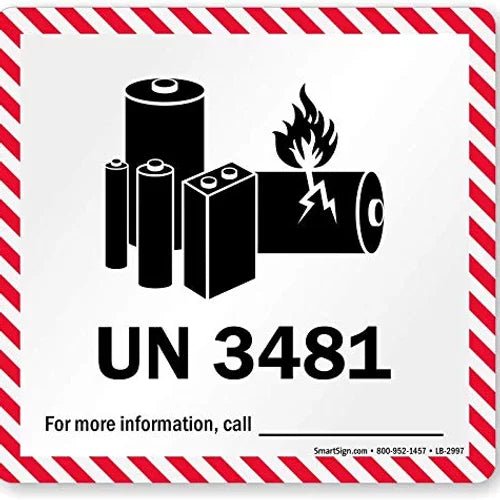
The collection also includes lithium battery markings for UN3090, UN3091, UN3480 and UN3481. These labels are available in a 4.7" x 4.3" format and packaged in rolls of 500 for commercial shipping, warehouse and fulfillment operations.
Package labels should be selected and applied according to the actual contents, packaging configuration, carrier, transportation mode and current applicable requirements. A label alone does not determine whether a shipment is properly classified, packaged, documented or approved for transportation.
What Are Shipping and Hazardous Labels?
Shipping labels are printed adhesive markings used to communicate instructions or warnings on the exterior of a package. Common examples include Fragile, This Side Up, Do Not Stack, Refrigerate Upon Arrival and Handle With Care.
Hazardous labels identify certain regulated material classes, battery types or shipment conditions. Their colors, symbols, numbers and printed information help trained personnel recognize the type of material or handling requirement associated with a shipment.
Handling labels and hazardous labels do not serve the same purpose. A fragile sticker provides an operational handling request, while a hazardous-material marking may form part of a regulated communication system with specific classification, packaging, documentation and placement requirements.
Businesses should avoid selecting labels based only on product appearance or a general product description. The shipper is responsible for determining the correct classification and complete shipping requirements for the material being transported.
Shipping and Hazardous Label Types Available from Gpack Supplies
| Label Type | Label Size | Roll Quantity | Common Application |
|---|---|---|---|
| Fragile – Please Handle With Care | 3" x 5" | 500 labels | Glassware, ceramics, artwork, instruments and delicate products |
| Handle With Care Glass | 3" x 5" | 500 labels | Glass products, bottles, mirrors, windows and breakable containers |
| This Side Up – Two Arrows | 3" x 5" | 500 labels | Products that should remain in a defined upright orientation |
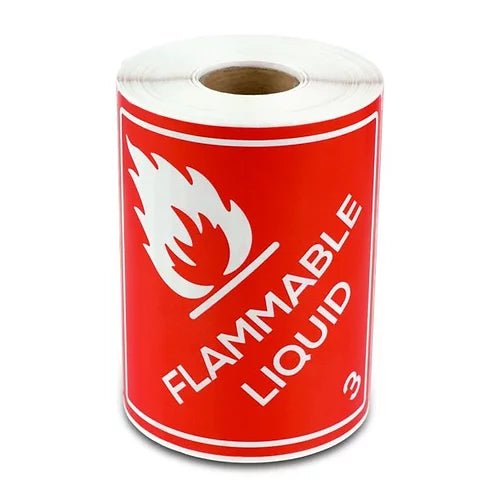
| Class 3 Flammable Liquid | 4" x 4" | 500 labels | Properly classified regulated flammable-liquid shipments |
| Class 4 Flammable Solid | 4" x 4" | 500 labels | Properly classified regulated flammable-solid shipments |
| Class 6 Toxic | 4" x 4" | 500 labels | Properly classified regulated toxic-material shipments |
| Class 8 Corrosive | 4" x 4" | 500 labels | Properly classified regulated corrosive-material shipments |
| Class 9 Miscellaneous | 4" x 4" | 500 labels | Properly classified Class 9 miscellaneous hazardous materials |
| Limited Quantity Y | 4" x 4" | 500 labels | Eligible limited-quantity air shipments when applicable requirements are met |
| UN3090 Lithium Metal Battery | 4.7" x 4.3" | 500 labels | Lithium metal batteries shipped by themselves when correctly classified |
| UN3091 Lithium Metal Battery | 4.7" x 4.3" | 500 labels | Lithium metal batteries packed with or contained in equipment |
| UN3480 Lithium Ion Battery | 4.7" x 4.3" | 500 labels | Lithium ion batteries shipped by themselves when correctly classified |
| UN3481 Lithium Ion Battery | 4.7" x 4.3" | 500 labels | Lithium ion batteries packed with or contained in equipment |
| Refrigerate Upon Arrival | 3" x 5" | 500 labels | Food, supplements, laboratory items and temperature-sensitive products |
| Do Not Separate | 1" x 2" | 500 stickers | Bundled cartons, paired components and multi-piece shipments |
| Do Not Stack | 3" x 5" | 500 labels | Crush-sensitive cartons, equipment and irregular freight |
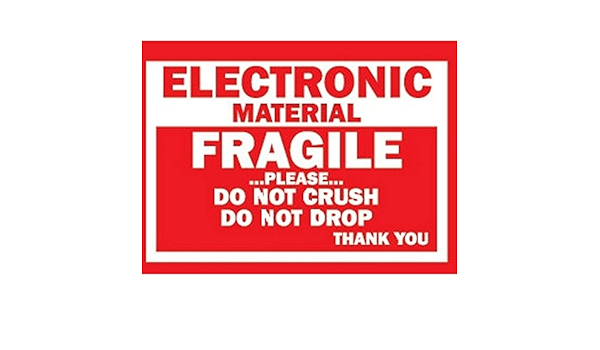
| Fragile Electronic Material | 3" x 5" | 500 labels | Computers, circuit boards, instruments and electronic equipment |
Shipping Handling Labels for Fragile and Sensitive Products
Fragile – Please Handle With Care Labels
Fragile labels provide a high-visibility handling message for cartons containing glassware, ceramics, instruments, artwork, decorative products and other breakable merchandise.
A fragile sticker does not replace proper internal cushioning. Products should still be packed inside an appropriately sized box with bubble wrap, foam, kraft paper, corrugated inserts or other suitable protective materials.
Handle With Care Glass Labels
Handle With Care Glass labels identify packages containing bottles, windows, mirrors, glass components and other breakable products. The printed message helps warehouse and delivery personnel recognize that careful handling is requested.
Glass products should be separated from each other, protected around corners and prevented from moving inside the outer carton. Double-wall boxes or reinforced containers may be necessary for heavier glass shipments.
Fragile Electronic Material Labels
Fragile Electronic Material labels are useful for computers, monitors, circuit boards, instruments, controls and other electronic equipment requiring careful handling.
These labels do not provide electrostatic-discharge protection. Static-sensitive components should be packed in appropriate anti-static bags, shielding materials or other packaging selected for the product.
Orientation and Package-Handling Labels
This Side Up Two Arrows Labels
This Side Up labels communicate the preferred package orientation. They are commonly used on containers holding liquids, glassware, equipment, appliances or products that may be damaged when inverted.
Apply orientation labels to more than one visible side when practical. The arrows should point toward the intended top of the package and remain unobstructed by tape, stretch film or carrier labels.
Caution This Side Up Labels
Caution This Side Up labels combine an orientation message with a visual warning. They are useful when packages need to remain upright during warehousing, palletizing and transportation.
Do Not Stack Labels
Do Not Stack labels identify cartons and equipment that may be damaged by the weight of another package. Common uses include crush-sensitive products, irregular freight, machinery and boxes without sufficient top-load strength.
The package should also be configured to discourage stacking when necessary. A label communicates the instruction but cannot physically prevent another load from being placed above the shipment.
Do Not Separate Labels
Do Not Separate labels help identify paired cartons, bundled components and multi-piece orders that should remain together during warehouse handling and delivery.
Multiple-piece shipments should also use matching order references, carton numbering or strapping when appropriate. The label supports identification but should not be the only method used to keep a shipment together.
Temperature and Refrigeration Handling Labels
Refrigerate Upon Arrival Labels
Refrigerate Upon Arrival labels communicate that the recipient should place the product into refrigerated storage after delivery. They are useful for selected foods, meal components, supplements, cosmetics, laboratory items and other temperature-sensitive merchandise.
This handling instruction does not provide temperature control during transportation. Products requiring thermal protection should be shipped inside a validated packaging system using thermal mailers, insulated liners, gel packs, coolers or other appropriate materials.
Place the label in a visible area near the shipping label without covering barcodes, addresses or required markings. When several cartons are included in the shipment, label each package that requires refrigeration.
Hazard Class Labels
Class 3 Flammable Liquid Labels
Class 3 labels are intended for shipments that have been properly identified and classified as regulated flammable liquids. Potential products may include certain paints, solvents, fuels, adhesives, coatings and chemical mixtures.
A product containing a flammable ingredient is not automatically shipped under a particular classification. The shipper must determine the correct description, packing group, quantity limits, packaging and transportation requirements.
Class 4 Flammable Solid Labels
Class 4 labels are used for qualifying regulated materials associated with flammable solids and related hazards. The specific division and shipping requirements depend on the material properties and classification.
Do not use a Class 4 label based only on a product name. Review the product documentation and current transportation requirements before preparing the shipment.
Class 6 Toxic Labels
Class 6 toxic labels identify qualifying regulated toxic substances. These materials may present serious health risks if swallowed, inhaled or absorbed, depending on their properties.
Toxic-material shipments may require approved packaging, documentation, employee training and quantity controls. The label forms only one part of the complete shipping process.
Class 8 Corrosive Labels
Class 8 labels are used for qualifying corrosive substances. Certain acids, bases, cleaners, industrial chemicals and battery-related products may fall into this class when they meet applicable criteria.
Corrosive liquids should be packaged to prevent leakage and incompatible-material contact. Inner containers, absorbent materials and outer packaging must be selected according to the shipment.
Class 9 Miscellaneous Labels
Class 9 identifies qualifying miscellaneous hazardous materials that present a transportation hazard but are not assigned to another primary hazard class.
Because Class 9 covers different materials and situations, shippers must verify the exact classification, marking and documentation requirements for the product being transported.
Limited Quantity Y Labels
The Limited Quantity Y marking is associated with eligible limited-quantity shipments prepared for air transportation under applicable requirements. It should not be confused with the standard surface limited-quantity marking.
Eligibility depends on the material, inner packaging quantity, gross package weight, combination packaging and transportation requirements. Not every hazardous product qualifies for a limited-quantity exception.
A Limited Quantity Y label does not eliminate all packaging, documentation, training or carrier requirements. Businesses should verify the complete shipment before applying the marking.
Lithium Battery Labels: UN3090, UN3091, UN3480 and UN3481
Lithium battery shipments are identified according to battery chemistry and whether the batteries are shipped separately, packed with equipment or contained inside equipment.
Selecting the correct lithium battery label requires knowing whether the shipment contains lithium metal or lithium ion batteries and how the batteries are packaged relative to the equipment.
| UN Number | General Battery Description | General Packaging Relationship |
|---|---|---|
| UN3090 | Lithium metal batteries | Batteries shipped by themselves |
| UN3091 | Lithium metal batteries | Batteries packed with or contained in equipment |
| UN3480 | Lithium ion batteries | Batteries shipped by themselves |
| UN3481 | Lithium ion batteries | Batteries packed with or contained in equipment |
UN3090 Lithium Metal Battery Labels
UN3090 generally identifies lithium metal batteries shipped by themselves. These shipments may be subject to significant transportation restrictions and carrier limitations.
UN3091 Lithium Metal Battery Labels
UN3091 generally identifies lithium metal batteries packed with equipment or contained inside equipment. The exact packaging method affects the applicable shipment requirements.
UN3480 Lithium Ion Battery Labels
UN3480 generally identifies lithium ion batteries shipped separately from equipment. Examples may include standalone rechargeable battery packs and replacement batteries.
UN3481 Lithium Ion Battery Labels
UN3481 generally identifies lithium ion batteries packed with equipment or installed inside equipment. Examples may include electronics shipped with their batteries or devices containing installed rechargeable batteries.
Battery condition, watt-hour rating, lithium content, quantity, state of charge, packaging and transportation method can affect shipment requirements. Damaged, defective or recalled batteries may be subject to different or additional restrictions.
How to Choose the Correct Shipping Label
Identify the Actual Package Contents
Begin with an accurate description of every product inside the package. Review product documentation and confirm whether the shipment contains liquids, chemicals, batteries, fragile items or temperature-sensitive materials.
Determine Whether the Label Is Operational or Regulatory
Fragile, Do Not Stack and This Side Up labels communicate handling instructions. Hazard class and lithium battery labels may be associated with regulated transportation requirements.
Confirm the Transportation Mode
Ground, air, ocean and international shipments may have different requirements. A marking that applies to one transportation method may not be sufficient or appropriate for another.
Verify Label Dimensions and Format
Confirm that the selected label format, colors, symbols and dimensions match the shipment requirements. Do not resize, alter or cover regulated markings without verifying that the result remains acceptable.
Review Carrier Requirements
Carriers may impose additional restrictions, documentation procedures or acceptance policies. Confirm service eligibility before tendering the shipment.
Use Current Information
Transportation requirements can change. Businesses should use current official guidance, carrier instructions and qualified shipping personnel when preparing regulated shipments.
How to Apply Shipping and Hazardous Labels
- Complete the internal packaging and seal the outer container.
- Confirm the exact label required for the package contents.
- Select a flat, clean and dry application surface.
- Remove dust, moisture, loose cardboard fibers and oil.
- Remove the label from the roll without folding or damaging it.
- Position the label before allowing the adhesive to make full contact.
- Apply the center of the label first.
- Smooth outward toward all edges.
- Press firmly across the complete adhesive surface.
- Keep the label away from carton corners and closure seams.
- Do not cover carrier labels, barcodes or other required markings.
- Apply labels to multiple sides when required or operationally useful.
- Inspect the finished package before carrier pickup.
Best Placement for Package Labels
Use a Flat Exterior Panel
Place labels on a broad, flat surface where the complete design remains visible. Avoid wrapping a label around a box edge or applying it across two panels.
Keep Labels Away from Tape Seams
Packing tape, box flaps and closure seams create uneven surfaces that may reduce adhesion or distort printed information.
Avoid Stretch-Film Wrinkles
When applying labels to pallet wrap, select a smooth and tightly wrapped area. Loose film can wrinkle, tear or detach during handling.
Do Not Cover Barcodes
Keep shipping labels, tracking barcodes and address information separate and fully readable.
Maintain Required Visibility
Hazardous and battery markings should remain unobstructed throughout transportation. Do not place documents, straps or additional stickers over them.
Shipping Labels Compared with Packaging Protection
| Packaging Item | Primary Function | Important Limitation |
|---|---|---|
| Fragile labels | Communicate a careful-handling request | Do not cushion or reinforce the product |
| This Side Up labels | Communicate preferred orientation | Do not physically prevent inversion |
| Do Not Stack labels | Communicate a stacking restriction | Do not provide top-load protection |
| Bubble wrap and foam | Provide cushioning and surface protection | Do not communicate external instructions |
| Corrugated boxes | Provide rigid containment and stacking strength | Must be selected according to product weight and fragility |
| Hazardous labels | Communicate regulated hazard information when applicable | Do not replace classification, packaging, documentation or training |
Best Practices for Shipping and Hazardous Labels
- Identify the exact contents before selecting a label.
- Separate operational handling labels from regulated hazardous markings.
- Use labels with the correct wording, dimensions, colors and symbols.
- Apply labels only to clean, dry and compatible surfaces.
- Keep labels flat, complete and unobstructed.
- Do not place labels over carton seams or sharp corners.
- Keep carrier barcodes and address labels fully readable.
- Use adequate internal cushioning even when Fragile labels are applied.
- Confirm battery chemistry before selecting a lithium battery label.
- Verify whether batteries are separate, packed with or contained in equipment.
- Review transportation mode and carrier acceptance requirements.
- Train employees who prepare regulated shipments.
- Inspect every package before releasing it to the carrier.
- Use current official requirements rather than old labels or outdated instructions.
How to Store Shipping Label Rolls
Store shipping and hazardous label rolls in a clean, dry and temperature-controlled warehouse area. Keep unused rolls inside their original cartons or protective packaging until needed.
Avoid excessive heat, direct sunlight, high humidity and contact with water. Poor storage conditions can affect the face material, printed graphics and adhesive performance.
Do not place heavy merchandise on top of label cases. Excessive pressure can deform the roll cores, damage the label edges or make the rolls difficult to dispense.
Organize inventory by label type, size and UN number. Clearly separated storage locations help prevent employees from selecting a similar-looking but incorrect marking.
Rotate inventory and remove damaged, faded or outdated labels from active packing stations. Printed markings should remain sharp, complete and easy to identify.
Industries That Use Shipping and Hazardous Labels
- Warehouses and distribution centers
- E-commerce fulfillment operations
- Manufacturers and industrial facilities
- Chemical and laboratory suppliers
- Electronics and battery distributors
- Automotive parts suppliers
- Medical and pharmaceutical businesses
- Food and temperature-sensitive product distributors
- Third-party logistics providers
- Freight and transportation companies
- Export packaging operations
- Furniture and appliance distributors
- Glass and mirror companies
- Retail shipping departments
- Moving and storage businesses
Frequently Asked Questions About Shipping and Hazardous Labels
What are shipping labels used for?
Shipping labels communicate handling, orientation, temperature and package instructions to warehouse employees, carriers and receiving personnel.
What hazardous labels does Gpack Supplies offer?
Gpack Supplies offers Class 3, Class 4, Class 6, Class 8, Class 9, Limited Quantity Y and lithium battery labels for UN3090, UN3091, UN3480 and UN3481.
What size are the handling labels?
Most Fragile, This Side Up, Do Not Stack and temperature-handling labels in this collection measure 3" x 5".
What size are the hazard class labels?
The Class 3, Class 4, Class 6, Class 8, Class 9 and Limited Quantity Y labels measure 4" x 4".
What size are the lithium battery labels?
The UN3090, UN3091, UN3480 and UN3481 lithium battery labels measure 4.7" x 4.3".
How many labels are included on each roll?
The products shown in this collection contain 500 labels or stickers per roll.
Do Fragile labels guarantee careful handling?
No. They communicate a handling request but do not guarantee carrier treatment or replace adequate protective packaging.
Should fragile products still use bubble wrap?
Yes. Fragile products should receive suitable cushioning, separation and a properly sized outer container.
Where should This Side Up labels be placed?
Apply them to visible package sides with the arrows pointing toward the intended top of the carton.
Can Do Not Stack labels prevent stacking?
No. They communicate an instruction but do not physically prevent another package from being placed above the shipment.
What are Do Not Separate labels used for?
They identify paired cartons, bundled components and multi-piece shipments that should remain together.
What are Refrigerate Upon Arrival labels used for?
They communicate that the recipient should place the product into refrigerated storage after delivery.
Do refrigeration labels keep products cold?
No. They provide an instruction only. Temperature-sensitive products require suitable insulated packaging and refrigerants when necessary.
What does Class 3 mean?
Class 3 identifies qualifying regulated flammable liquids when the material has been properly classified.
What does Class 4 mean?
Class 4 covers qualifying regulated materials associated with flammable solids and related hazards.
What does Class 6 toxic mean?
Class 6 toxic identifies qualifying regulated toxic substances that meet applicable classification criteria.
What does Class 8 corrosive mean?
Class 8 identifies qualifying corrosive materials that may damage tissue, metal or other materials.
What does Class 9 miscellaneous mean?
Class 9 identifies qualifying miscellaneous hazardous materials that present a transportation hazard not assigned to another primary class.
What is a Limited Quantity Y label?
It is a marking associated with eligible limited-quantity air shipments when all applicable requirements are satisfied.
What is UN3090?
UN3090 generally identifies lithium metal batteries shipped by themselves.
What is UN3091?
UN3091 generally identifies lithium metal batteries packed with equipment or contained inside equipment.
What is UN3480?
UN3480 generally identifies lithium ion batteries shipped by themselves.
What is UN3481?
UN3481 generally identifies lithium ion batteries packed with equipment or contained inside equipment.
Can I select a lithium battery label based only on the device?
No. You must confirm the battery chemistry and whether it is separate, packed with equipment or contained inside equipment.
Can damaged lithium batteries use the same shipping process?
Damaged, defective or recalled batteries may be subject to different restrictions and should not be shipped without reviewing current requirements.
Does applying a hazardous label make a shipment compliant?
No. Compliance may also require correct classification, packaging, quantity limits, documentation, employee training and carrier acceptance.
Can shipping labels be applied over packing tape?
A clean carton surface is generally preferable because seams and tape edges may reduce adhesion or visibility.
Can hazardous labels wrap around a box corner?
Labels should remain flat, complete and visible. Avoid placing them across carton corners unless current applicable requirements specifically allow it.
Can labels be applied to stretch film?
Yes, when the film is smooth, clean and tightly applied, although the label must remain visible and securely attached.
How should label rolls be stored?
Store them in a clean, dry area away from direct sunlight, excessive heat, moisture and heavy pressure.
Does Gpack Supplies sell shipping labels by the roll?
Yes. The labels shown in this collection are supplied in commercial rolls of 500.
Is local pickup available in Miami?
Local pickup and fast delivery options available in Miami and Broward.
Etiquetas de envío, manejo, materiales peligrosos y baterías de litio
Las etiquetas de envío permiten comunicar instrucciones importantes para cajas, pallets, productos frágiles, cargas reguladas y mercancía sensible a la temperatura.
Gpack Supplies ofrece etiquetas de Fragile, Handle With Care, This Side Up, Do Not Stack, Do Not Separate y Refrigerate Upon Arrival, además de etiquetas para materiales peligrosos Clase 3, Clase 4, Clase 6, Clase 8, Clase 9 y Limited Quantity Y.
También están disponibles etiquetas para baterías de litio UN3090, UN3091, UN3480 y UN3481 en medida de 4.7" x 4.3" y rollos de 500 etiquetas.
Aplicaciones principales
- Productos frágiles y vidrio
- Electrónicos y equipos sensibles
- Cajas que deben permanecer verticales
- Productos que no deben apilarse
- Mercancía que debe refrigerarse después de la entrega
- Materiales correctamente clasificados como peligrosos
- Baterías de litio y equipos que contienen baterías
- Cargas para almacenes, transporte y exportación
- Pedidos de comercio electrónico
Una etiqueta de Fragile o Handle With Care no sustituye el uso de bubble wrap, foam, cajas resistentes, relleno y protección interna. La etiqueta comunica una instrucción, pero el producto debe empacarse correctamente.
Las etiquetas de materiales peligrosos deben seleccionarse según el producto, su clasificación, cantidad, tipo de embalaje y método de transporte. Colocar una etiqueta no garantiza por sí solo que un envío cumpla con todos los requisitos.
Para baterías de litio, es necesario confirmar si son lithium metal o lithium ion y si se envían solas, empacadas con un equipo o instaladas dentro del equipo.
Local pickup and fast delivery options available in Miami and Broward.