
Collection: Foam Rolls | Protective Packaging Foam for Wrapping & Cushioning
Protect delicate, polished and finished products with polyethylene foam rolls from Gpack Supplies. This collection includes 1/4-inch cushioning foam and lightweight 1/32-inch foam for wrapping, interleaving, surface protection, packing and commercial shipping.
Choose from 12-inch, 24-inch, 36-inch and 72-inch roll widths. Our 1/4-inch foam rolls measure 250 feet long, while the thinner 1/32-inch options provide up to 2,000 feet of material for high-volume packaging operations.
Packaging foam is lightweight, flexible, moisture-resistant and non-abrasive, making it ideal for furniture, glass, mirrors, electronics, appliances, metal parts, cabinets and painted surfaces. Select the thickness and width that best match the product size and required cushioning level.
Local pickup and fast delivery options available in Miami and Broward.

-
Foam Roll 1/4" 72" x 250' (slit 12", 18", 36")
Regular price From $50.00 USDRegular price -
Foam Roll 1/4” x 12” x 250' – Single Roll (Protective Packaging)
Regular price $50.00 USDRegular price -
Foam Roll 1/4” x 12” x 250' – 6 Rolls Bundle (Protective Packaging)
Regular price $275.00 USDRegular price -
Foam Roll 1/4” x 24” x 250' – 3 Rolls Bundle (Protective Packaging)
Regular price $275.00 USDRegular price -
Foam Roll 1/4” x 36” x 250' – 2 Rolls Bundle (Protective Packaging)
Regular price $275.00 USDRegular price -
Foam Roll – 1/32 x 12 x 2000 – 6 Rolls Bundle
Regular price $275.00 USDRegular price -
Foam Roll – 1/32 x 24 x 2000 – 3 Rolls Bundle
Regular price $275.00 USDRegular price


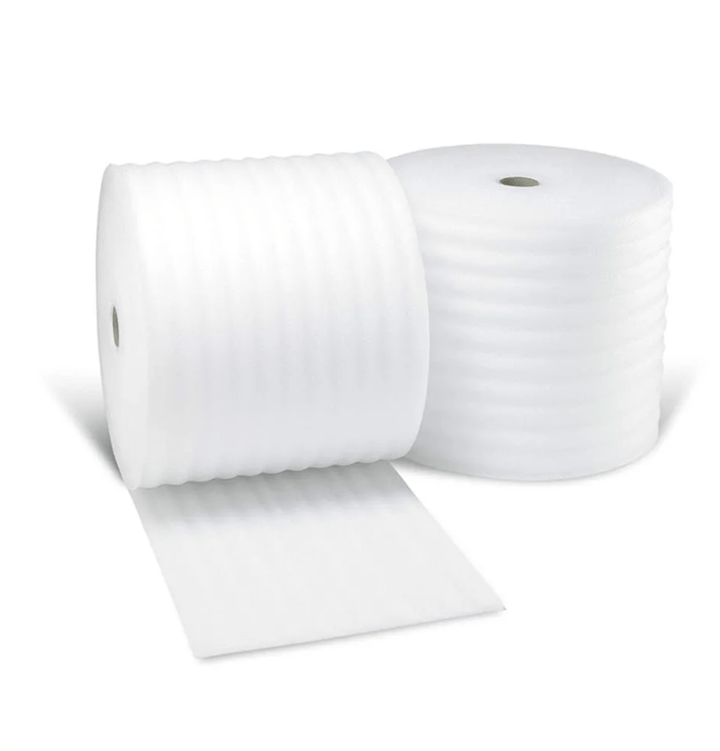


Foam Rolls for Wrapping, Cushioning and Surface Protection
Foam rolls provide lightweight and non-abrasive protection for delicate, polished and finished products during packing, storage, handling and transportation. The flexible polyethylene foam material creates a soft barrier between merchandise and the walls of a shipping box, helping reduce scratches, abrasion, dust exposure and light impact damage.
Gpack Supplies offers protective packaging foam in multiple thicknesses, widths, roll lengths and commercial bundle quantities. Available products include 1/4-inch foam rolls for stronger cushioning and 1/32-inch foam rolls for lightweight wrapping, interleaving and surface separation.
Roll widths include 12, 24, 36 and 72 inches. The 1/4-inch options measure 250 feet long, while the thinner 1/32-inch foam rolls measure 2,000 feet long for high-volume warehouse, manufacturing and fulfillment applications.
These polyethylene foam rolls can be wrapped around individual products, placed between stacked components, cut into protective sheets or combined with bubble wrap, corrugated rolls, stretch film, edge protectors and shipping boxes. Their clean and lightweight construction makes them especially useful for products that require protection without excessive packaging weight.
What Are Polyethylene Foam Rolls?
Polyethylene foam rolls are continuous rolls of flexible closed-cell foam used for cushioning, wrapping and protecting products. The closed-cell structure contains small sealed air pockets that help absorb ordinary shocks while creating a soft separation layer around the packaged item.
Unlike rigid foam boards, rolled foam bends around corners, curved surfaces and irregular shapes. Packaging teams can cut only the amount required for each product, helping reduce unnecessary material use and simplifying repeatable packing procedures.
Protective foam is frequently used as the first layer around a delicate surface. The wrapped product can then be placed inside a corrugated box, protected with bubble wrap or secured to a pallet with stretch film.
Standard white polyethylene foam is generally clean, low-lint and resistant to moisture. It is commonly selected for furniture, glass, appliances, electronics, fabricated components, painted parts and other products that may be scratched by rougher packaging materials.
Foam Roll Sizes Available from Gpack Supplies
Selecting the correct foam thickness and width helps businesses achieve consistent product protection while controlling material and labor costs. Gpack Supplies offers the following commercial foam roll configurations:
| Foam Roll Size | Bundle Quantity | Recommended Uses |
|---|---|---|
| 1/4" x 12" x 250' | 6 rolls | Small products, frames, components, electronics and narrow surfaces |
| 1/4" x 24" x 250' | 3 rolls | Furniture parts, cabinets, glass, appliances and medium-size products |
| 1/4" x 36" x 250' | 2 rolls | Large furniture, machinery, panels and oversized products |
| 1/4" x 72" x 250' | Master roll | Large products and slit-width applications in 12", 18" or 36" sections |
| 1/32" x 12" x 2,000' | 6 rolls | Light wrapping, interleaving, components and scratch protection |
| 1/32" x 24" x 2,000' | 3 rolls | Panels, glass, furniture parts, electronics and surface separation |
Choosing Between 1/4-Inch and 1/32-Inch Foam
1/4-Inch Foam Rolls for Stronger Cushioning
One-quarter-inch foam provides a thicker cushioning layer for products that need more separation and impact absorption. It is commonly used for furniture, appliances, glass, mirrors, cabinets, machinery, artwork and large finished components.
The thicker material helps absorb ordinary bumps during handling and creates additional space between the product and the outer shipping container. It is also useful when packaging items with projecting parts, irregular surfaces or vulnerable edges.
Gpack Supplies offers 1/4-inch foam in 12-inch, 24-inch, 36-inch and 72-inch widths. Selecting a width close to the product dimensions can reduce overlapping sections and packing time.
1/32-Inch Foam Rolls for Lightweight Protection
One-thirty-second-inch foam is a thin packaging material intended primarily for surface protection, interleaving and light wrapping. It helps reduce scratches, dust and direct contact between products without creating excessive bulk.
This thickness is frequently used between stacked glass, panels, metal parts, furniture components and manufactured products. The long 2,000-foot rolls are practical for high-volume packaging lines that consume material continuously.
Thin foam should not be considered a complete cushioning solution for highly fragile or heavy products. When greater impact protection is needed, combine it with bubble wrap, corrugated packaging, edge protectors or other cushioning materials.
Benefits of Protective Packaging Foam
Non-Abrasive Surface Protection
The soft foam surface helps prevent rubbing and scratching on painted, polished, glass, plastic, metal and finished products. This makes foam especially useful as the first packaging layer placed directly against sensitive merchandise.
Lightweight Cushioning
Polyethylene foam provides useful cushioning without adding substantial weight to the shipment. Lower packaging weight can help businesses maintain efficient shipping operations while still protecting products.
Flexible Wrapping
Foam rolls bend around curved surfaces, corners and irregular shapes. They can be folded, layered or wrapped according to the product dimensions and protection requirements.
Moisture Resistance
Closed-cell polyethylene foam resists moisture absorption better than many paper-based packaging materials. However, foam packaging alone should not be treated as waterproof protection.
Clean and Low-Lint Packaging
Foam generally creates less dust and loose debris than shredded paper, loose fill and some kraft packaging products. This is beneficial when protecting electronics, appliances, furniture and products with clean finished surfaces.
Customizable Lengths
Continuous rolls allow packaging teams to cut custom lengths for each item. This flexibility supports small products, oversized furniture, long components and repeatable production-line packaging.
Product Separation
Foam sheets cut from a roll can be placed between stacked items to prevent direct product-to-product contact. This application is known as interleaving and is frequently used for glass, panels, metal parts and furniture components.
Common Applications for Foam Rolls
Furniture and Cabinet Protection
Foam rolls are commonly used to protect tables, chairs, cabinets, doors, shelving, headboards and finished wood components. The material helps reduce scratches during manufacturing, delivery, moving and storage.
For large furniture pieces, 24-inch and 36-inch rolls generally provide more efficient coverage. A 72-inch master roll can be useful for oversized products or custom slit-width requirements.
Glass, Mirrors and Decorative Panels
Protective foam creates a soft layer against glass, mirrors, framed artwork and decorative panels. It helps prevent surface abrasion and can separate multiple items placed inside the same carton or crate.
Because glass is highly fragile, foam should normally be combined with bubble wrap, corner protectors, corrugated sheets or a properly sized shipping container.
Electronics and Appliances
Foam rolls can protect monitors, televisions, appliances, computer equipment, instruments and other finished electronics. The lightweight material prevents hard packaging materials from contacting the product surface.
Standard white polyethylene foam is not automatically anti-static. Static-sensitive electronic components should be packaged using materials specifically manufactured and labeled for anti-static or electrostatic-discharge protection.
Metal Parts and Fabricated Components
Manufacturers can use foam to separate painted, coated, polished or fabricated metal components. Thin foam helps prevent direct contact between stacked parts, while thicker foam provides greater separation and cushioning.
Additional corrosion protection may be necessary when packaging bare metal products for extended storage, export or humid environments.
Moving and Storage
Moving companies and storage facilities use foam rolls for furniture, lamps, dishes, picture frames, decorations, appliances and household products. Foam can also be placed between items inside moving boxes or storage containers.
E-Commerce and Fulfillment
Online retailers and fulfillment centers can establish standard foam lengths for frequently shipped products. Repeatable cutting and wrapping procedures help improve packing consistency and reduce unnecessary material use.
Manufacturing and Assembly Operations
Foam rolls can protect parts between manufacturing stages, separate finished components and reduce surface contact while products wait for assembly, inspection or shipment.
Automotive Parts
Foam can protect trim pieces, painted components, mirrors, panels, accessories and other automotive parts. The correct thickness depends on the component weight, finish and transportation method.
Artwork and Picture Frames
Framers, galleries and art handlers use foam to protect frame finishes, glass surfaces and decorative elements. Corners should receive additional protection because foam alone may not prevent concentrated impact damage.
How to Choose the Correct Foam Roll
Determine the Required Protection Level
Start by identifying whether the product needs light scratch protection or stronger cushioning. Thin 1/32-inch foam is appropriate for interleaving and light wrapping, while 1/4-inch foam provides a thicker cushioning layer.
Measure the Product
Measure the width, height and circumference of the item before selecting a foam roll. A width close to the product dimensions can reduce overlap, cutting time and material waste.
Consider Product Weight
Heavy merchandise can compress thin foam quickly. Machinery, furniture and industrial components may require thicker foam combined with rigid corrugated packaging or additional cushioning.
Evaluate Surface Sensitivity
Painted, polished, coated and high-gloss surfaces often benefit from foam as the first protective layer. Test the foam on a small, inconspicuous area before packaging high-value or unusually sensitive finishes.
Review Shipping Conditions
Products moving through several distribution centers or traveling long distances may experience more impacts and handling. These shipments often need multiple protective layers and a stronger outer container.
Estimate Packaging Volume
High-volume operations may benefit from long 2,000-foot rolls, while lower-volume or thicker cushioning applications may be better served by 250-foot rolls.
Select the Correct Bundle Quantity
Commercial bundle quantities allow businesses to maintain sufficient inventory across multiple packing stations. Review warehouse consumption and storage space before selecting a bundle.
Foam Rolls Compared with Other Packaging Materials
| Packaging Material | Main Advantage | Best Applications | Considerations |
|---|---|---|---|
| Foam rolls | Soft, lightweight and non-abrasive protection | Furniture, glass, electronics, painted parts and polished surfaces | May require additional protection against heavy impacts |
| Bubble wrap | Deeper cushioning and impact absorption | Fragile products, electronics, glass and void fill | Bulkier than thin foam and may leave impressions on some finishes |
| Corrugated rolls | Economical kraft cushioning and surface coverage | Furniture, machinery, metal parts and irregular products | Rougher than polyethylene foam on delicate surfaces |
| Kraft paper | Economical wrapping and void fill | General packaging, product separation and box filling | Provides less cushioning than foam |
| Corrugated sheets | Rigid separation and load distribution | Pallet layers, flat products, dividers and stacking | Does not conform easily around irregular shapes |
How to Use Foam Rolls for Packaging
- Inspect and clean the product surface before packaging.
- Measure the product and determine the required foam width and length.
- Cut the foam cleanly using an appropriate warehouse cutting tool.
- Place the foam against the delicate or finished surface.
- Wrap the entire product or cover only the vulnerable areas.
- Overlap sections where additional cushioning is required.
- Secure the foam to itself using tape, stretch film or an outer packaging layer.
- Avoid applying adhesive directly to painted, stained or polished products.
- Place the wrapped item inside the appropriate box, crate or pallet system.
- Fill open space to prevent movement during transportation.
- Reinforce corners and edges when the product is fragile or heavy.
- Inspect the finished package before shipping or storage.
Best Practices for Packaging with Foam
- Choose the foam thickness according to product weight and fragility.
- Use clean material against polished or finished surfaces.
- Test foam compatibility before packaging high-value finishes.
- Do not use thin foam as the only protection for highly fragile products.
- Reinforce exposed edges and corners with additional protection.
- Avoid compressing foam excessively when applying stretch film.
- Secure tape to the foam instead of directly to the product.
- Use an appropriately sized shipping carton or crate.
- Prevent product movement by filling empty space inside the container.
- Use anti-static packaging for static-sensitive electronics.
- Store rolls in a clean and dry warehouse location.
- Keep polyethylene foam away from excessive heat and open flames.
Industries That Use Protective Foam Rolls
- Furniture manufacturers and distributors
- Cabinet and millwork companies
- Glass and mirror businesses
- Electronics manufacturers and distributors
- Appliance suppliers
- Moving and storage companies
- Warehouses and fulfillment centers
- Metal fabrication companies
- Automotive parts suppliers
- Artwork and picture-framing businesses
- Industrial equipment manufacturers
- Medical equipment suppliers
- Third-party logistics providers
- E-commerce businesses
- Export packaging operations
Frequently Asked Questions About Foam Rolls
What are foam rolls used for?
Foam rolls are used for wrapping, cushioning, interleaving, product separation and surface protection during shipping, manufacturing, storage and moving.
What material are packaging foam rolls made from?
Protective foam rolls are commonly made from lightweight closed-cell polyethylene foam.
What foam thicknesses does Gpack Supplies offer?
Gpack Supplies offers 1/4-inch foam for stronger cushioning and 1/32-inch foam for lightweight wrapping and surface protection.
What is 1/4-inch foam used for?
One-quarter-inch foam is commonly used for furniture, cabinets, appliances, glass, machinery and products that require a thicker cushioning layer.
What is 1/32-inch foam used for?
One-thirty-second-inch foam is primarily used for light wrapping, scratch protection, interleaving and separating stacked products.
What foam roll widths are available?
Available widths include 12 inches, 24 inches, 36 inches and a 72-inch master roll with slit-width options.
How long are the foam rolls?
The 1/4-inch foam rolls measure 250 feet long, while the 1/32-inch foam rolls measure 2,000 feet long.
Can foam rolls protect furniture?
Yes. Foam can protect tables, chairs, cabinets, doors, shelving and finished furniture components from scratches and light impacts.
Can foam rolls protect glass and mirrors?
Yes. Foam provides a soft protective layer, but fragile glass and mirrors should also receive corner protection and stronger cushioning.
Can foam rolls be used for electronics?
Foam can protect finished electronic products, but static-sensitive components require packaging specifically designed for anti-static protection.
Are standard white foam rolls anti-static?
Standard white polyethylene foam should not be considered anti-static unless it is specifically manufactured and labeled for that purpose.
Is foam better than bubble wrap?
Foam is generally better for lightweight, non-abrasive surface protection. Bubble wrap usually provides deeper cushioning against impacts.
Is foam better than corrugated wrap?
Foam is softer and more appropriate for polished or delicate surfaces. Corrugated wrap is often more economical for furniture, machinery and industrial products.
Can foam rolls be cut to custom lengths?
Yes. Continuous rolls can be cut to the length required for each product or packaging application.
Can foam be used between stacked products?
Yes. Thin foam is commonly used as interleaving material between glass, panels, metal parts and finished components.
Does polyethylene foam absorb water?
Closed-cell polyethylene foam resists moisture absorption, but it should not be used as a replacement for waterproof packaging.
Does foam add significant shipping weight?
No. Polyethylene foam is lightweight and provides useful protection without substantially increasing shipment weight.
Can foam rolls be used for moving?
Yes. Moving companies use foam to wrap furniture, picture frames, lamps, dishes, appliances and other household products.
How should foam be secured around a product?
Foam can be secured with tape applied to the foam itself, stretch film or an outer corrugated package.
Can tape be applied directly to furniture?
Avoid applying adhesive tape directly to painted, stained, polished or delicate furniture surfaces.
Which foam width is best for small products?
A 12-inch foam roll is usually suitable for small components, electronics, frames and narrow products.
Which foam width is best for furniture?
The 24-inch or 36-inch widths are practical for many furniture pieces, cabinets and panels. Oversized products may benefit from a 72-inch master roll.
What does a slit foam roll mean?
A slit foam roll is a wider master roll divided into narrower sections for different packaging applications.
Can foam rolls be used inside shipping boxes?
Yes. Foam can wrap products, line carton surfaces and separate items inside corrugated shipping boxes.
Can foam rolls be combined with bubble wrap?
Yes. Foam can protect the product surface while bubble wrap provides additional cushioning against impacts.
How should foam rolls be stored?
Store foam rolls in a clean, dry warehouse area away from excessive heat, direct sunlight and open flames.
Does Gpack Supplies sell foam rolls for commercial use?
Yes. Gpack Supplies offers commercial foam roll bundles for warehouses, manufacturers, moving companies, distributors and fulfillment operations.
Is local pickup available in Miami?
Local pickup and fast delivery options available in Miami and Broward.
Rollos de espuma para embalaje y protección
Los rollos de espuma de polietileno ofrecen una protección ligera, flexible y no abrasiva para muebles, vidrios, espejos, electrónicos, electrodomésticos, piezas metálicas y productos con superficies delicadas.
La estructura de celda cerrada ayuda a reducir rayones, roces, polvo y pequeños impactos durante el almacenamiento, la manipulación, las mudanzas y el transporte.
Gpack Supplies ofrece espuma de 1/4 de pulgada para mayor amortiguación y espuma de 1/32 de pulgada para envoltura ligera, separación de productos y protección superficial.
Las medidas disponibles incluyen rollos de 12, 24, 36 y 72 pulgadas de ancho. Los rollos de 1/4 de pulgada tienen 250 pies de largo y las opciones de 1/32 de pulgada tienen 2,000 pies de largo.
Aplicaciones principales
- Protección de muebles y gabinetes
- Envoltura de vidrios, espejos y cuadros
- Protección de electrónicos y electrodomésticos
- Separación de piezas metálicas y paneles
- Protección de superficies pintadas o pulidas
- Embalaje para mudanzas y almacenamiento
- Intercalado entre productos apilados
- Preparación de pedidos para comercio electrónico
- Protección de componentes durante procesos de fabricación
La espuma de 1/32 de pulgada es adecuada para protección ligera y separación entre superficies. La espuma de 1/4 de pulgada ofrece una capa más gruesa para productos que necesitan mayor amortiguación.
Para productos muy frágiles, pesados o de alto valor, se recomienda combinar la espuma con bubble wrap, protectores de esquina, cartón corrugado, cajas resistentes o stretch film.
Local pickup and fast delivery options available in Miami and Broward.