
Collection: Corrugated Shipping Boxes | Single Wall, Double Wall & Moving Boxes
Gpack Supplies offers a complete selection of corrugated shipping boxes for e-commerce, warehousing, manufacturing, moving, storage and industrial shipping. Our collection includes single wall boxes, double wall boxes, cube boxes, moving boxes and heavy-duty bulk containers available in multiple sizes for commercial packaging operations.
Whether you are shipping lightweight retail products, stacking palletized freight or packing household items for relocation, corrugated cardboard boxes provide dependable protection, efficient storage and cost-effective shipping. Choose the appropriate board strength and box style based on product weight, stacking requirements and transportation conditions.
Browse our complete selection of shipping cartons for parcel shipments, LTL freight, warehouse storage and export packaging. Pair your boxes with packing tape, stretch wrap, bubble cushioning, kraft paper and shipping labels for a complete packaging solution.
Local pickup and fast delivery options available in Miami and Broward.

-
Single Wall Corrugated Shipping Boxes – Multiple Sizes
Regular price From $0.39 USDRegular price -
Single Wall Cube Boxes
Regular price From $0.36 USDRegular price -
Double Wall Corrugated Shipping Boxes – Multiple Heavy Duty Sizes
Regular price From $1.45 USDRegular price -
Heavy Duty Bulk Containers
Regular price From $10.00 USDRegular price -
Moving Boxes
Regular price From $1.30 USDRegular price -
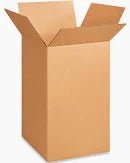
Moving Boxes 18 x 18 x 24 (large)
Regular price $2.85 USDRegular price -
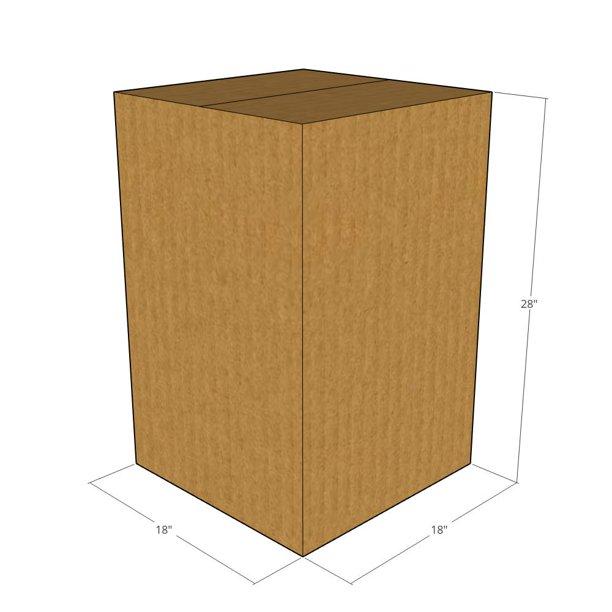
Double Wall Boxes 18 x 18 x 28 – Dishpack
Regular price $6.00 USDRegular price -
Heavy Duty Bulk D-Container 58 x 42 x 40
Regular price $25.00 USDRegular price -
Heavy Duty Bulk Mini D Container 48 x 40 x 36 (Gaylord Box)
Regular price $25.00 USDRegular price -
Heavy Duty Bulk E-Container 40 x 28 x 24
Regular price $12.00 USDRegular price -
Heavy Duty Bulk EH Container 36 x 23 x 23
Regular price $10.00 USDRegular price -
Moving Boxes 16 x 12 x 12 (small)
Regular price $1.35 USDRegular price -
Moving Boxes 18 x 12 x 12 (small)
Regular price $1.35 USDRegular price -
Moving Boxes 18 x 18 x 16 (medium)
Regular price $2.25 USDRegular price -
Moving Boxes 18 x 18 x 28 (Dishpack)
Regular price $6.00 USDRegular price -
Moving Boxes 24 x 12 x 12 (medium)
Regular price $2.65 USDRegular price -
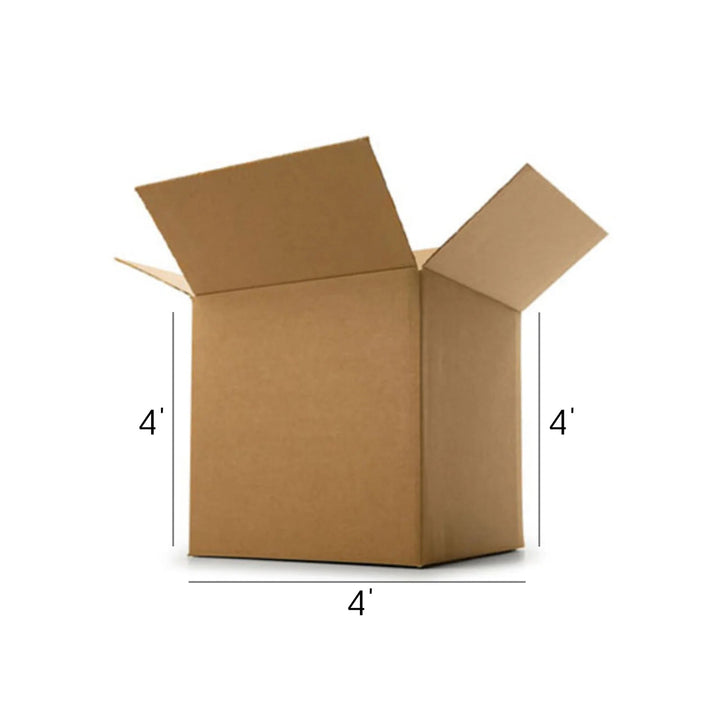
Corrugated Shipping Boxes – 4 x 4 x 4 – Single Wall Cube
Regular price $0.40 USDRegular price -
Corrugated Shipping Boxes – 5 x 5 x 5 – Single Wall Cube
Regular price $0.36 USDRegular price -
Corrugated Shipping Boxes – 6 x 6 x 6 – Single Wall Cube
Regular price $0.38 USDRegular price -
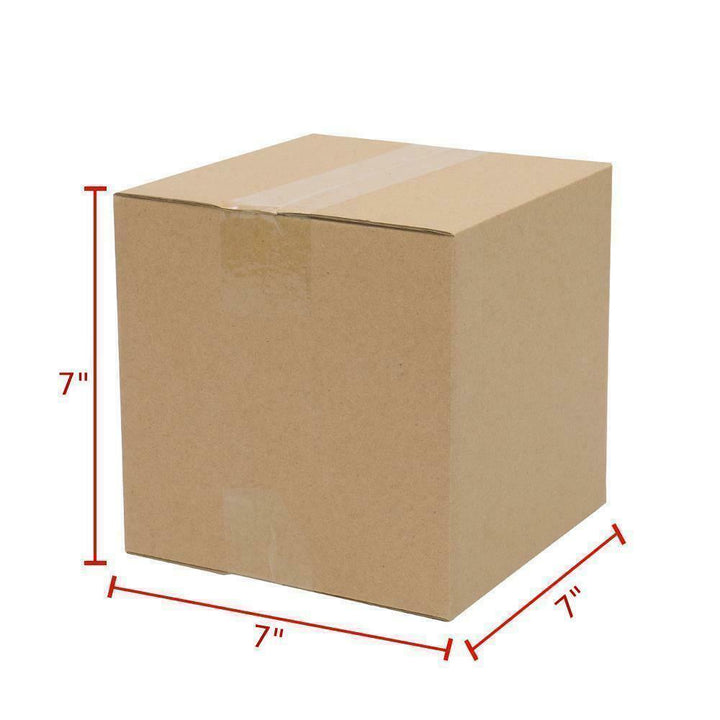
Corrugated Shipping Boxes – 7 x 7 x 7 – Single Wall Cube
Regular price $0.60 USDRegular price -
Corrugated Shipping Boxes – 8 x 8 x 8 – Single Wall Cube
Regular price $0.49 USDRegular price -
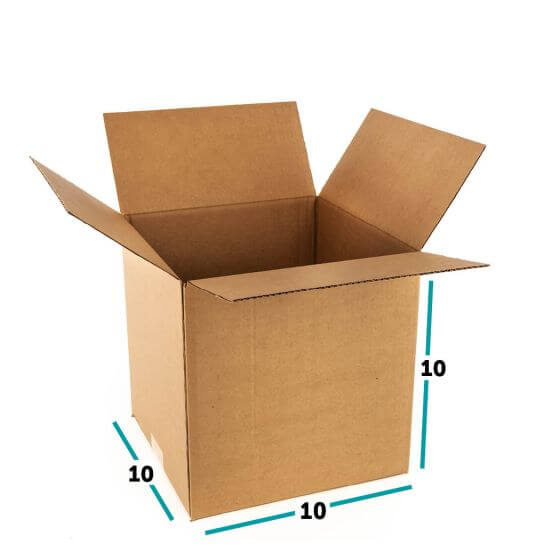
Corrugated Shipping Boxes – 10 x 10 x 10 – Single Wall Cube
Regular price $0.75 USDRegular price -
Corrugated Shipping Boxes – 12 x 12 x 12 – Single Wall Cube
Regular price $0.95 USDRegular price -
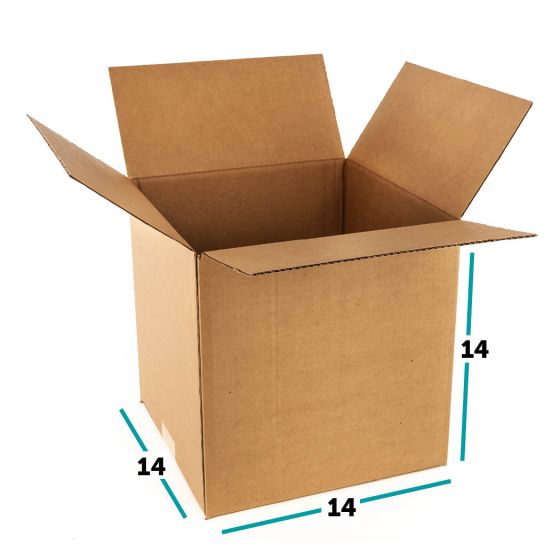
Corrugated Shipping Boxes – 14 x 14 x 14 – Single Wall Cube
Regular price $1.45 USDRegular price

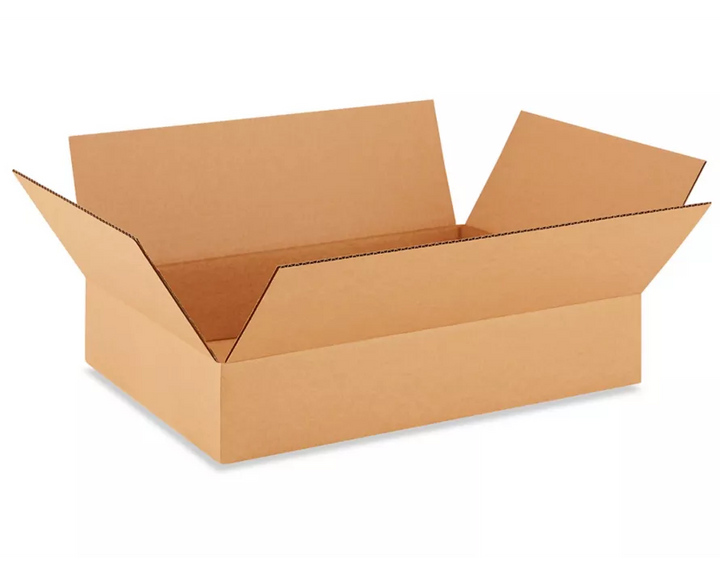
















Corrugated Shipping Boxes for E-Commerce, Warehousing, Moving and Freight
Corrugated shipping boxes provide reliable protection for products moving through warehouses, parcel networks, fulfillment centers, storage facilities and freight operations. Their lightweight but rigid construction makes them one of the most widely used packaging formats for commercial shipping, moving and industrial distribution.
Gpack Supplies offers a complete selection of corrugated shipping boxes, including single wall boxes, cube boxes, double wall boxes, moving boxes and heavy-duty bulk containers. These packaging options support lightweight merchandise, household goods, industrial products, palletized freight and large-volume warehouse storage.
The correct box depends on the product dimensions, weight, fragility, stacking requirements and transportation method. Lightweight e-commerce products may only require a single wall carton, while heavier products, export shipments and demanding warehouse loads may require double wall construction or a heavy-duty bulk container.
Corrugated boxes can be combined with packing tape, kraft paper, newsprint sheets, bubble wrap, foam rolls, corner protectors, stretch film and shipping labels to create a complete commercial packaging system.
Local pickup and fast delivery options available in Miami and Broward.
Types of Corrugated Boxes Available from Gpack Supplies
| Box Type | Construction | Best Applications |
|---|---|---|
| Single wall shipping boxes | One fluted medium between two linerboards | E-commerce, retail products, parcel shipping and general warehouse use |
| Single wall cube boxes | Square or nearly equal length, width and height | Round products, jars, small appliances and balanced loads |
| Double wall boxes | Two fluted mediums and three linerboards | Heavy products, industrial shipments, stacking and export packaging |
| Moving boxes | Corrugated cartons selected for residential and office relocation | Household goods, files, books, clothing and storage |
| Heavy-duty bulk containers | Large corrugated container designed for pallet-sized loads | Warehouse storage, manufacturing, recycling and bulk freight |
What Is a Corrugated Shipping Box?
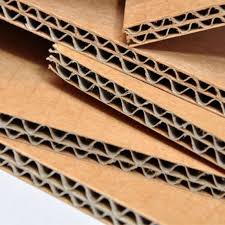
A corrugated shipping box is manufactured from fluted paperboard positioned between one or more flat linerboards. The fluted structure creates air columns that improve rigidity, cushioning and resistance to compression.
Corrugated board is different from ordinary paperboard or chipboard. Folding cartons used for cereal, cosmetics and retail packaging are usually thinner and do not provide the same shipping strength as corrugated containers.
Corrugated boxes are commonly supplied flat to reduce warehouse space. They are assembled by folding the panels and sealing the bottom and top flaps with carton-sealing tape, staples, adhesive or another approved closure.
The strength of a finished box depends on the board construction, flute profile, liner quality, dimensions, seams, storage conditions and how the load is packed.
Why Corrugated Boxes Are Widely Used for Shipping
Lightweight Construction
Corrugated boxes provide rigid packaging without the weight of wood crates or many reusable containers. Lower package weight can help control parcel and freight costs.
Multiple Sizes and Styles
Corrugated boxes are available in compact, rectangular, cube, tall, flat and bulk formats. This allows businesses to select packaging that closely matches the product.
Stacking Strength
Properly packed corrugated cartons can be stacked in warehouses, trucks and pallet loads. Board strength, humidity and load distribution affect stacking performance.
Printable Surface
Shipping labels, handling labels, barcodes and branding can be applied to the exterior liner.
Recyclable Fiber Construction
Corrugated board is commonly accepted by commercial cardboard recycling programs when it is clean, dry and free from contaminants.
Compatibility with Packaging Materials
Boxes can be used with packing paper, bubble wrap, foam, packing peanuts, tape, stretch film, strapping and edge protectors.
Single Wall Corrugated Shipping Boxes
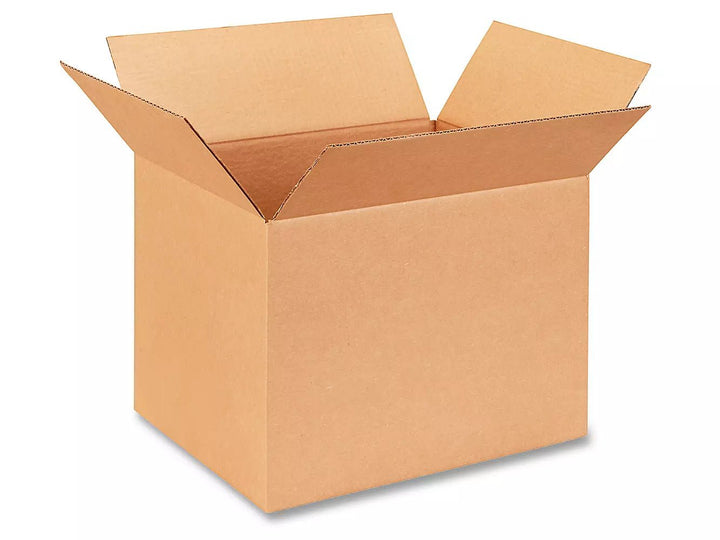
Single wall corrugated boxes contain one fluted layer between two linerboards. This is the most common construction for general parcel shipping, e-commerce fulfillment, retail distribution and warehouse packaging.
Single wall cartons offer a practical balance of strength, weight and cost. They are suitable for many lightweight and moderate-weight products when the correct box dimensions and board grade are selected.
Typical applications include clothing, packaged food, household products, accessories, office supplies, plastic components, replacement parts and consumer merchandise.
Single wall boxes should not automatically be used for every shipment. Heavy, sharp, fragile or high-value products may require double wall board, reinforced packaging or an interior protective system.
Single Wall Cube Boxes
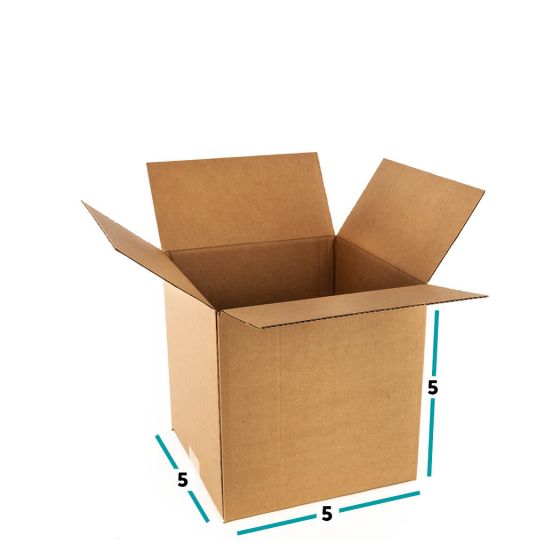
Cube boxes have approximately equal length, width and height. Their balanced shape is useful for products that are round, square, bulky or difficult to fit inside long rectangular cartons.
Cube cartons are commonly used for jars, bottles with dividers, small appliances, decorative products, rolled merchandise, replacement parts and multiple compact items.
A cube shape can provide balanced stacking when the interior load is evenly distributed. However, unused space should still be filled with kraft paper, foam, bubble wrap or another suitable cushioning material.
Avoid selecting an oversized cube box simply because the product fits through the opening. Excessive empty space increases movement and may increase dimensional-weight charges.
Double Wall Corrugated Boxes
Double wall boxes contain two fluted layers separated by an additional linerboard. This construction creates greater rigidity, puncture resistance and stacking strength than many single wall cartons.
They are commonly used for heavy products, industrial components, machinery parts, appliances, export shipments, consolidated orders and long-distance freight.
Double wall board is also useful when boxes will be stacked for extended periods or exposed to repeated handling throughout warehouse and transportation networks.
A stronger box does not eliminate the need for proper interior packaging. Heavy products should be immobilized, sharp edges should be covered and the carton bottom should be reinforced appropriately.
Single Wall vs. Double Wall Boxes
| Feature | Single Wall Boxes | Double Wall Boxes |
|---|---|---|
| Fluted layers | One | Two |
| Package weight | Lower | Higher |
| Relative strength | General-purpose | Heavy-duty |
| Typical uses | Parcel shipping, retail and e-commerce | Industrial, export and heavy freight |
| Stacking performance | Suitable for many ordinary loads | Better for heavier or taller stacks |
Moving Boxes for Residential and Commercial Relocation
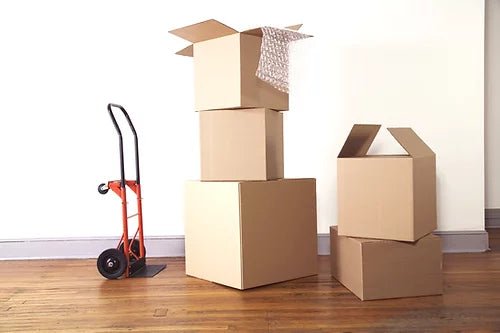
Moving boxes are corrugated cartons selected for household, office and storage applications. They are used for clothing, kitchenware, books, décor, files, electronics, bedding and personal items.
Smaller boxes are generally better for books, dishes, tools and dense products because the finished carton remains easier to lift. Larger cartons are better for pillows, bedding, clothing and lightweight household goods.
Fragile products should be wrapped individually with newsprint paper, foam or bubble wrap. Empty space should be filled to prevent products from shifting.
Every moving box should be labeled on the top and at least one side with the room, contents and any handling instructions.
Heavy-Duty Bulk Containers and Gaylord Boxes
Heavy-duty bulk containers, often called Gaylord boxes, are large corrugated containers designed to sit on pallets and hold substantial quantities of loose or packaged products.
They are commonly used for manufacturing components, plastic parts, textiles, recycling materials, food ingredients, warehouse transfers and consolidated freight.
Bulk containers may be single wall, double wall, triple wall or reinforced depending on the application. The pallet, bottom construction and interior load distribution are critical to performance.
Businesses should confirm the container dimensions, board grade, weight capacity, closure method and pallet compatibility before use.
What Is an RSC Corrugated Box?
RSC means Regular Slotted Container. It is the most common corrugated-box style used for shipping and storage.
All flaps are the same length from the edge of the box to the fold line. The two outer flaps meet near the center when the carton is closed.
RSC boxes are economical to manufacture, easy to assemble and compatible with manual or automatic tape-sealing systems.
They are used for parcel shipping, moving, e-commerce, manufacturing and general warehouse packaging.
Understanding Corrugated Box Dimensions
Corrugated boxes are normally described in the order length x width x height.
Length
Length is usually the longest side of the box opening.
Width
Width is the shorter side of the box opening.
Height
Height is measured from the opening to the bottom of the assembled box.
Box dimensions may be listed as inside or outside measurements. Inside dimensions describe usable product space, while outside dimensions are used for shipping, storage and pallet planning.
Inside Dimensions vs. Outside Dimensions
Inside dimensions are the most useful measurements when determining whether a product fits inside a box.
Outside dimensions are larger because they include the thickness of the corrugated board. These dimensions are important when calculating parcel size, dimensional weight, shelf space and pallet configuration.
A double wall carton has thicker board than a single wall carton, so the difference between inside and outside measurements may be greater.
Always confirm which dimension standard is being used before ordering a large quantity of boxes.
How to Measure a Product for a Shipping Box
- Place the product in its finished shipping orientation.
- Measure the longest exterior dimension.
- Measure the second-longest dimension.
- Measure the product height.
- Add space for protective wrapping and cushioning.
- Allow enough room for void fill around all sides.
- Avoid selecting a box with excessive unused space.
- Confirm that the finished package fits carrier requirements.
- Test the product inside an assembled sample box.
Understanding ECT Box Strength
ECT means Edge Crush Test. It measures the compression strength of corrugated board when force is applied to the board edge.
ECT ratings are commonly used to estimate stacking and compression performance. A higher rating generally indicates stronger resistance to vertical crushing.
Common ratings may include 32 ECT, 44 ECT and heavier industrial grades. The correct rating depends on the product weight, box dimensions, stacking height and shipping environment.
ECT should not be treated as the only measure of package performance. Box design, humidity, flute direction, tape closure and interior support also affect the finished carton.
Understanding Burst Test Ratings
Burst strength measures the amount of pressure required to rupture corrugated board. It is commonly expressed in pounds per square inch.
Burst-rated boxes are often selected for products that may push against the carton walls or experience rough handling.
Traditional examples include 200 lb test boxes and heavier industrial grades.
ECT and burst test ratings evaluate different characteristics. One should not automatically be substituted for the other without reviewing the packaging application.
ECT vs. Burst Test Boxes
| Test Type | What It Measures | Useful For |
|---|---|---|
| Edge Crush Test | Vertical compression strength of the board edge | Stacking and warehouse compression performance |
| Burst Test | Resistance to puncture or rupture pressure | Rough handling and pressure against carton walls |
Corrugated Flute Types
The flute is the wave-shaped paper layer between the linerboards. Flute size affects cushioning, thickness, stacking strength and printability.
| Flute Type | General Characteristics | Common Applications |
|---|---|---|
| A flute | Thicker profile with strong cushioning | Fragile products and protective packaging |
| B flute | Good puncture resistance and compact profile | Retail packaging, partitions and general cartons |
| C flute | Balanced cushioning, stacking and strength | Common shipping boxes and moving cartons |
| E flute | Thin profile and smooth printing surface | Retail, cosmetics, electronics and small products |
| BC double wall | Combination providing cushioning and stacking strength | Heavy-duty shipping and industrial loads |
| EB double wall | Thinner double wall with a smoother surface | Retail presentation and stronger compact packaging |
How to Choose the Correct Corrugated Box
Review Product Weight
Heavier products require stronger board, reinforced bottoms and carefully selected closure materials.
Measure the Product
Select a box that allows enough room for cushioning without creating excessive empty space.
Consider Fragility
Fragile products may require additional space for bubble wrap, foam, dividers or molded protection.
Evaluate Shipping Method
Parcel networks, LTL freight, air cargo and internal warehouse transfers create different handling conditions.
Review Stacking Requirements
Tall pallet stacks and long-term storage may require stronger board and consistent load distribution.
Consider Moisture and Humidity
Corrugated fiber loses strength when exposed to moisture. Warehouses with high humidity may require stronger packaging or moisture protection.
Test the Complete Package
Test representative shipments before ordering large production quantities.
How to Assemble a Corrugated Shipping Box
- Place the flat box on a clean packing surface.
- Open the carton and square the four side panels.
- Fold the smaller bottom flaps inward.
- Fold the larger bottom flaps over the smaller flaps.
- Align the center seam without leaving a gap.
- Apply packing tape across the full bottom seam.
- Extend the tape several inches onto both side panels.
- Add side-seam tape for an H-seal when required.
- Press the tape firmly against the cardboard.
- Inspect the bottom before loading the product.
How to Pack a Corrugated Box Correctly
- Select a box appropriate for the product size and weight.
- Reinforce the bottom before adding merchandise.
- Place cushioning material in the bottom of the carton.
- Wrap fragile products individually.
- Place heavier items at the bottom.
- Separate products to prevent direct contact.
- Fill side spaces with kraft paper, foam or bubble wrap.
- Fill the top space so products cannot move vertically.
- Avoid overfilling or forcing the flaps closed.
- Close and tape the top seams.
- Apply shipping and handling labels.
- Inspect the finished package before release.
Void Fill and Cushioning for Corrugated Boxes
Kraft Paper
Kraft paper can be crumpled to fill open spaces, wrap products and separate merchandise.
Newsprint Packing Paper
Unprinted newsprint sheets are useful for dishes, glassware, décor and household products.
Bubble Wrap
Bubble wrap provides flexible impact cushioning for fragile and sensitive products.
Foam Rolls
Foam provides lightweight, non-abrasive protection for polished, painted and delicate surfaces.
Packing Peanuts
Loose-fill peanuts surround irregular products and fill open space inside boxes.
Corrugated Inserts and Dividers
Inserts and partitions separate products and improve interior organization.
How to Seal Corrugated Shipping Boxes
Pressure-sensitive packing tape is the most common closure for standard corrugated boxes.
Acrylic tape is useful for general warehouse and storage applications. Hot-melt tape provides aggressive initial adhesion on many corrugated surfaces.
Water-activated tape bonds with the carton surface and is often used for tamper-evident or high-volume packaging systems.
The correct tape depends on box weight, recycled content, temperature, storage time and shipping conditions.
Center-Seam and H-Taping Methods
Center-Seam Method
One strip of tape is applied along the primary center seam. This is suitable for many lightweight and standard cartons.
H-Taping Method
The H-taping method seals the center seam and the two side seams. The finished pattern resembles the letter H.
H-taping provides more complete closure and can help prevent dust entry, edge lifting and accidental opening.
Heavy, valuable or long-distance shipments may benefit from H-taping on both the bottom and top of the carton.
Using Strapping with Corrugated Boxes
Strapping can reinforce groups of boxes, heavy cartons and palletized loads. Polypropylene, polyester and steel strapping are available for different load requirements.
Strapping creates concentrated pressure and can crush corrugated corners if overtightened.
Use corner edge protectors beneath the strap to distribute tension and reduce carton damage.
Strapping should not replace proper tape closure, interior packaging or a box with suitable board strength.
Palletizing Corrugated Shipping Boxes
- Use a pallet in good condition and suitable for the load.
- Place the heaviest cartons on the bottom layer.
- Keep box edges aligned whenever possible.
- Avoid excessive pallet overhang.
- Distribute weight evenly across the pallet.
- Use interlocking patterns only when they do not reduce compression strength excessively.
- Place corner protectors on vulnerable pallet edges.
- Apply stretch film around the base, middle and top.
- Add strapping when required for heavy loads.
- Keep labels and barcodes visible.
- Inspect the completed pallet before movement.
How Humidity Affects Corrugated Boxes
Corrugated fiber absorbs moisture from the environment. High humidity can soften the board and reduce compression and stacking performance.
Boxes should be stored in a clean, dry and ventilated area away from leaks, wet floors and exterior walls.
Do not place unprotected cartons directly on concrete floors because they may absorb moisture.
Use pallets, shelving or dunnage to keep boxes elevated and allow airflow.
Products shipping through humid or refrigerated environments may require additional moisture protection.
How to Store Flat Corrugated Boxes
Store unassembled boxes flat in a clean, dry warehouse area. Keep each size clearly identified.
Avoid leaning large quantities against walls because the panels may bend, warp or slide.
Do not place extremely heavy merchandise on top of flat cartons.
Protect box bundles from forklift damage, water leaks and direct sunlight.
Use older inventory before newer deliveries to reduce long-term warehouse exposure.
How to Reduce Dimensional Weight
Dimensional weight is based on package volume rather than only actual weight. Oversized boxes may create higher shipping charges even when the product is lightweight.
Select a box that closely fits the product and required cushioning.
Avoid using a large box simply because it is already available at the packing station.
Standardize box sizes around common product groups and track unused space in completed shipments.
Smaller boxes can also reduce void-fill consumption and improve pallet utilization.
Corrugated Boxes for E-Commerce Fulfillment
E-commerce operations use corrugated boxes for products that require more protection than poly mailers or padded envelopes can provide.
Common applications include cosmetics, electronics, home goods, glass containers, multiple-item orders and subscription products.
Standardizing several box sizes can improve packing speed and reduce dimensional-weight charges.
Shipping labels should be applied to a flat panel without covering carton seams, tape edges or handling labels.
Corrugated Boxes for Warehouses and Distribution Centers
Warehouses use boxes for receiving, storage, order fulfillment, internal transfers, returns and outbound shipping.
Carton sizes should be organized near the packing stations that use them most often.
Damaged, wet or crushed boxes should be removed from active shipping inventory.
Finished cartons should be inspected for open seams, weak bottoms, inadequate tape and missing labels before shipment.
Corrugated Boxes for Manufacturing and Industrial Shipping
Manufacturers use corrugated cartons for replacement parts, components, finished products, kits and warehouse transfers.
Heavy or sharp products may require double wall boxes, plywood supports, foam inserts or custom dividers.
Products should not rest directly against carton walls when they can puncture or abrade the board.
Industrial packaging should be tested under representative stacking, vibration and handling conditions.
Corrugated Boxes for Moving and Storage
Moving boxes organize household and office products while protecting them from dust, impacts and handling.
Use small boxes for dense products and larger boxes for lightweight goods.
Do not pack liquids, chemicals or wet products without suitable sealed inner packaging.
Storage cartons should be kept off the floor and away from walls where condensation or leaks may occur.
Common Corrugated Box Problems
Box Bottom Opens
The tape may be too weak, poorly applied or incompatible with the carton surface.
Carton Collapses During Stacking
The board may be too weak, the load may be uneven or humidity may have reduced compression strength.
Products Move Inside the Box
The box may be oversized or may not contain enough void fill.
Box Corners Crush
Excessive strapping, poor stacking or heavy top loads may damage the corners.
Carton Walls Puncture
Sharp products may require protective caps, foam, dividers or stronger board.
Tape Does Not Stick
Dust, moisture, cold temperatures and highly recycled surfaces may reduce adhesive performance.
Shipping Label Wrinkles
Apply the label to a clean, flat panel rather than over tape, seams or damaged cardboard.
Best Practices for Corrugated Shipping Boxes
- Choose the box according to product weight and dimensions.
- Use double wall construction for heavy or demanding loads.
- Measure interior space before ordering large quantities.
- Reinforce the bottom before loading products.
- Wrap fragile items individually.
- Fill all open spaces inside the carton.
- Use appropriate packing tape and sealing methods.
- Apply corner protectors beneath strapping.
- Avoid excessive pallet overhang.
- Keep boxes dry during storage and transportation.
- Do not reuse cartons with crushed corners or weak seams.
- Keep shipping labels flat and visible.
- Inspect every finished package before carrier pickup.
- Test representative packages before high-volume shipping.
Can Corrugated Shipping Boxes Be Reused?
Corrugated boxes may be reused when they remain clean, dry and structurally sound.
Remove or cover old shipping labels and barcodes to prevent carrier-scanning errors.
Inspect the corners, bottom seams, flaps and sidewalls before reuse.
Do not reuse boxes that are wet, punctured, crushed, contaminated or weakened.
High-value, heavy or fragile shipments should use packaging with verified strength rather than an unknown reused carton.
Recycling Corrugated Boxes
Corrugated cardboard is commonly recyclable when it is clean and dry.
Flatten boxes to reduce collection and storage volume.
Remove plastic film, foam, strapping and other non-paper packaging materials when required by the recycling program.
Boxes contaminated with food, oil, chemicals or excessive moisture may not be accepted.
Recycling requirements vary by municipality and commercial waste provider.
Industries That Use Corrugated Shipping Boxes
- E-commerce retailers
- Warehouses and distribution centers
- Manufacturing facilities
- Moving and storage companies
- Food and beverage distributors
- Cosmetic and skincare businesses
- Electronics suppliers
- Automotive parts distributors
- Medical and pharmaceutical suppliers
- Furniture and appliance companies
- Printing and publishing businesses
- Wholesale distributors
- Third-party logistics providers
- Freight and export companies
- Retail stores
- Subscription businesses
- Construction supply companies
- Office and commercial relocations
- Recycling and material recovery operations
- Industrial packaging departments
Frequently Asked Questions About Corrugated Shipping Boxes
What is a corrugated shipping box?
A corrugated shipping box is made from fluted paperboard positioned between flat linerboards for strength, cushioning and rigidity.
What box types does Gpack Supplies offer?
Gpack Supplies offers single wall boxes, cube boxes, double wall boxes, moving boxes and heavy-duty bulk containers.
What is the difference between corrugated cardboard and paperboard?
Corrugated board contains a fluted layer, while paperboard is usually a thinner solid sheet used for retail folding cartons.
What is a single wall box?
A single wall box has one fluted layer between two linerboards.
What is a double wall box?
A double wall box has two fluted layers and three linerboards for greater strength and rigidity.
When should I use double wall boxes?
Use double wall boxes for heavier products, demanding stacking, industrial shipments and long-distance freight.
What are cube boxes used for?
Cube boxes are useful for round, square, bulky and balanced products that fit better in a nearly equal-sided carton.
What is a moving box?
A moving box is a corrugated carton selected for packing household, office and storage items.
What is a Gaylord box?
A Gaylord box is a large bulk corrugated container commonly placed on a pallet for warehouse and industrial loads.
What is an RSC box?
RSC means Regular Slotted Container, the most common box style with outer flaps that meet near the center.
How are box dimensions listed?
Box dimensions are normally listed as length x width x height.
Are box dimensions inside or outside measurements?
They may be either, so the product specifications should always be confirmed.
What is ECT?
ECT means Edge Crush Test and measures compression strength along the edge of corrugated board.
What is burst strength?
Burst strength measures resistance to pressure that can rupture the board surface.
Is ECT the same as burst test?
No. They measure different board-performance characteristics.
What is corrugated flute?
The flute is the wave-shaped paper layer between the box linerboards.
What is C flute used for?
C flute is widely used for shipping boxes because it balances cushioning and stacking strength.
What is B flute used for?
B flute provides a compact profile and good puncture resistance for retail and general packaging.
What is E flute used for?
E flute provides a thin profile and smooth exterior for printed retail packaging and smaller products.
What is BC double wall?
BC double wall combines B and C flutes for heavy-duty strength and cushioning.
How much weight can a corrugated box hold?
Capacity depends on dimensions, board grade, construction, closure, humidity and load distribution.
How do I choose the correct box size?
Measure the product and add only enough space for wrapping, cushioning and secure closure.
Should products fit tightly inside a box?
Products should be secure but should have enough cushioning to prevent damage.
What can I use as void fill?
Kraft paper, newsprint, bubble wrap, foam, packing peanuts and corrugated inserts can fill empty space.
What tape should I use for corrugated boxes?
Acrylic, hot-melt and water-activated tapes are common options depending on the shipment.
What is the H-taping method?
H-taping seals the center seam and both side seams of a box.
Should I tape the bottom of a new box?
Yes. The bottom should be sealed and reinforced before loading the product.
Can strapping damage corrugated boxes?
Yes. Excessive tension can crush carton edges, so corner protectors may be needed.
Can corrugated boxes be palletized?
Yes. Boxes should be aligned, evenly loaded and secured with stretch film or strapping as required.
Why do boxes collapse in humid warehouses?
Corrugated fiber absorbs moisture, which can reduce compression strength.
Can shipping boxes be reused?
Yes, when they remain clean, dry and structurally sound.
Can corrugated boxes be recycled?
Most clean and dry corrugated boxes can be recycled through suitable cardboard-recycling programs.
Should old shipping labels be removed?
Yes. Old labels and barcodes should be removed or fully covered before reuse.
Can I ship fragile products in single wall boxes?
Some fragile products can use single wall boxes with proper cushioning, but heavier or high-value products may need double wall cartons.
Are double wall boxes waterproof?
No. Corrugated boxes can absorb water and should be protected from moisture.
Can corrugated boxes be stored directly on concrete floors?
It is better to store them on pallets or shelving to reduce moisture absorption and damage.
Does Gpack Supplies sell corrugated boxes in commercial quantities?
Yes. Gpack Supplies offers corrugated shipping boxes for warehouses, e-commerce, moving and industrial packaging.
Is local pickup available in Miami?
Local pickup and fast delivery options available in Miami and Broward.
Cajas corrugadas para envíos, mudanzas, almacenes y carga comercial
Las cajas corrugadas ofrecen protección, organización y resistencia para productos enviados por paquetería, freight, e-commerce, mudanzas y operaciones de almacén.
Gpack Supplies ofrece cajas single wall, cube boxes, double wall boxes, moving boxes y heavy-duty bulk containers para diferentes pesos, tamaños y aplicaciones.
Tipos de cajas disponibles
- Cajas corrugadas single wall para envíos generales
- Cube boxes para productos cuadrados, redondos o voluminosos
- Double wall boxes para productos pesados
- Moving boxes para mudanzas y almacenamiento
- Bulk containers y Gaylord boxes para cargas grandes
Las cajas single wall tienen una capa corrugada y son adecuadas para muchos productos ligeros y medianos. Las cajas double wall tienen dos capas corrugadas y ofrecen mayor resistencia para cargas pesadas, stacking y exportación.
Las dimensiones normalmente se expresan como largo x ancho x alto. Confirme si las medidas corresponden al interior o exterior de la caja.
Para seleccionar la caja correcta, mida el producto completamente preparado e incluya espacio para bubble wrap, foam, kraft paper o cualquier otro material protector.
No utilice una caja demasiado grande. El exceso de espacio aumenta el movimiento del producto, el consumo de relleno y los posibles cargos por dimensional weight.
Selle la parte inferior antes de colocar los productos. Para cargas pesadas o envíos de larga distancia, utilice un sellado tipo H en la parte inferior y superior.
Utilice kraft paper, newsprint, bubble wrap, foam rolls o packing peanuts para rellenar espacios vacíos y evitar movimiento dentro de la caja.
Para cargas palletizadas, coloque las cajas pesadas abajo, evite que sobresalgan del pallet y utilice corner protectors, stretch film y strapping cuando sea necesario.
Guarde las cajas en un área seca, limpia y elevada del piso. La humedad puede reducir considerablemente la resistencia del cartón corrugado.
Las cajas pueden reutilizarse cuando estén limpias, secas y en buenas condiciones. Retire o cubra todas las etiquetas y códigos de barras anteriores.
Local pickup and fast delivery options available in Miami and Broward.