
Colección: Embalaje de amortiguación y protección
Suministros de amortiguación y embalaje de burbujas: protección para envíos y almacenamiento
Proteja sus artículos en tránsito con materiales de amortiguación diseñados para absorber impactos, evitar rayones y reducir las reclamaciones por daños. Desde amortiguación de burbujas hasta rollos de espuma y cartón corrugado de una sola cara , Gpack Supplies cubre toda la gama para comercio electrónico, logística 3PL y operaciones de almacén.
Comprar por material
- Rollos de amortiguación de burbujas : protección ligera y relleno de espacios vacíos
- Plástico de burbujas industrial : amortiguación resistente para productos frágiles
- Rollos de espuma : protección y envoltura de superficies sin rayones
- Rollo corrugado (una cara) : revestimiento kraft con estrías para protección de bordes y superficies
- Sobres para listas de embalaje : protección de documentos y fácil identificación
Características principales
- Absorción de impactos y protección contra impactos para artículos frágiles.
- Materiales ligeros para controlar el peso DIM y los costos de flete
- Opciones perforadas para líneas de embalaje más rápidas
- Compatible con sellado de cajas de cartón, sobres y cajones.
Presupuesto
- Burbuja: alturas comunes de 3/16", 5/16", 1/2"; opciones antiestáticas disponibles
- Espuma: espesor típico de 1/16" a 1/4"; espuma de PE para protección de superficies
- Una cara: cartón kraft con estrías; formatos en rollo para bancos de trabajo
- Anchos de rollo: múltiples tamaños para piezas pequeñas hasta productos paletizados
Complete su embalaje con cinta de embalaje acrílica y cajas de cartón corrugado del tamaño adecuado. Para cargas en palés, agregue film estirable y protectores de bordes .
Materiales de protección para embalaje en Miami: rollos de burbuja (bubble), espuma y cartón corrugado singleface para envolver, rellenar espacios y proteger superficies. Ligeros, eficientes y listos para líneas de empaque de e-commerce, almacenes y 3PL. Compra al por mayor en Gpack Supplies con entrega rápida.

-
24" x 36" Newsprint Packing Paper Sheets – 25 lb Bundle
Precio habitual $32.00 USDPrecio habitual -
Styrofoam Packing Peanuts – 20 Cubic Feet – Void Fill Packaging
Precio habitual $25.00 USDPrecio habitual -
Bubble Rolls Retail
Precio habitual A partir de $48.00 USDPrecio habitual -
Bubble Rolls Retail SMALL 3/16" Length 300' Width 12" Case 4
Precio habitual $55.00 USDPrecio habitual -
Bubble Rolls Retail SMALL 3/16" Length 300' Width 24" Case 2
Precio habitual $55.00 USDPrecio habitual -
Bubble Rolls Retail SMALL 3/16" Length 300' Width 48" Case 1
Precio habitual $55.00 USDPrecio habitual -
Bubble Rolls Retail MEDIUM 5/16"Length 188' Width 12" Case 4
Precio habitual $52.00 USDPrecio habitual -
Bubble Rolls Retail MEDIUM 5/16"Length 188' Width 24" Case 2
Precio habitual $52.00 USDPrecio habitual -
Bubble Rolls Retail MEDIUM 5/16"Length 188' Width 48" Single Roll
Precio habitual $52.00 USDPrecio habitual -
Bubble Rolls Retail LARGE 1/2" Length 125' Width 12" Case 4
Precio habitual $48.00 USDPrecio habitual -
Bubble Rolls Retail LARGE 1/2" Length 125' Width 24" Case 2
Precio habitual $48.00 USDPrecio habitual -
Bubble Rolls LARGE 1/2" Length 125' Width 48" Case 1
Precio habitual $48.00 USDPrecio habitual -
Bubble Rolls Industrial
Precio habitual A partir de $60.00 USDPrecio habitual -
Bubble Roll Industrial 3/16” x 12” x 500' – Small Bubble (Case of 4)
Precio habitual $89.00 USDPrecio habitual -
Bubble Roll Industrial 3/16” x 24” x 500' – Small Bubble (Case of 2)
Precio habitual $89.00 USDPrecio habitual -
Bubble Roll Industrial 3/16” x 48” x 500' – Small Bubble (Case of 1)
Precio habitual $89.00 USDPrecio habitual -
Bubble Roll Industrial 5/16” x 12” x 375' – Medium Bubble (Case of 4)
Precio habitual $77.00 USDPrecio habitual -
24 x 375 Medium Bubble Wrap Rolls – 5/16 Bubble, Case of 2
Precio habitual $77.00 USDPrecio habitual -
Bubble Roll Industrial 5/16” x 48” x 375' – Medium Bubble (Case of 1)
Precio habitual $77.00 USDPrecio habitual -
Bubble Roll Industrial 1/2” x 12” x 250' – Large Bubble (Case of 4)
Precio habitual $60.00 USDPrecio habitual -
Bubble Roll Industrial 1/2” x 24” x 250' – Large Bubble (Case of 2)
Precio habitual $60.00 USDPrecio habitual -
Bubble Rolls Industrial 1/2" x 48" x 250' Large Bubble Case 1
Precio habitual $60.00 USDPrecio habitual -
Gel Packs for Shipping 8 oz – 1/2 lb Leak-Proof Cold Packs (80/Case)
Precio habitual $26.00 USDPrecio habitual -
Gel Ice Packs for Shipping 16 oz – 1 lb Heavy-Duty Cold Packs (40/Case)
Precio habitual $22.00 USDPrecio habitual





Cushioning and Protective Packaging for Shipping, Storage and Moving
Cushioning and protective packaging materials help prevent product movement, surface damage, impact, abrasion, punctures and compression during warehouse handling, parcel shipping, freight transportation, moving and long-term storage.
Gpack Supplies offers a broad selection of protective packaging supplies, including bubble wrap rolls, foam rolls, kraft paper, newsprint packing paper, packing peanuts, corrugated rolls, corrugated sheets, corner edge protectors, furniture covers, moving blankets, insulated thermal bubble rolls and gel ice packs.
These products support e-commerce fulfillment, warehouses, manufacturers, moving companies, furniture businesses, freight forwarders, retailers and commercial packing operations. The correct material depends on the product’s dimensions, weight, fragility, surface finish, temperature requirements and transportation conditions.
Lightweight cushioning materials can reduce product movement and absorb ordinary impacts, while heavier protective materials reinforce edges, separate products, cover furniture and stabilize palletized loads. Fragile, heavy or high-value products may require several protective materials used together.
Protective Packaging Products Available from Gpack Supplies
| Protective Material | Primary Function | Typical Applications |
|---|---|---|
| Bubble wrap rolls | Impact cushioning and void fill | Electronics, glass, décor, appliances and fragile products |
| Foam rolls | Non-abrasive surface protection | Furniture, polished metal, glass, electronics and painted products |
| Kraft paper rolls | Wrapping, cushioning and void fill | Boxes, warehouse packing, furniture and general shipping |
| Newsprint packing paper | Clean wrapping and separation | Dishes, glassware, household items and moving |
| Packing peanuts | Loose-fill cushioning | Irregular products, lightweight merchandise and open box spaces |
| Corrugated rolls | Flexible surface and edge protection | Furniture, metal parts, glass, machinery and irregular products |
| Corrugated sheets | Layering, separation and reinforcement | Pallets, cartons, flat products and warehouse storage |
| Corner edge protectors | Edge reinforcement and strap protection | Pallets, boxes, freight and stacked cartons |
| Furniture covers and moving blankets | Dust, abrasion and handling protection | Sofas, chairs, tables, appliances and storage |
| Thermal bubble rolls and gel packs | Insulation and temperature control support | Food, cosmetics, pharmaceuticals and cold-chain shipping |
How to Choose the Correct Protective Packaging Material
Evaluate Product Fragility
Fragile products such as glass, ceramics, electronics and decorative items usually require impact cushioning around all sides. Bubble wrap, foam or a combination of both may be appropriate.
Review the Surface Finish
Painted, polished, coated and glossy products may scratch when placed directly against rough paper or corrugated material. Foam rolls provide a softer, non-abrasive contact layer.
Consider Product Weight
Heavy products can compress lightweight cushioning. Dense merchandise may require thicker bubble wrap, corrugated protection, foam inserts or rigid support.
Measure Empty Box Space
Kraft paper, packing peanuts and bubble wrap can fill unused space and reduce product movement inside corrugated shipping boxes.
Check Sharp Edges
Sharp corners and metal components can puncture plastic cushioning. Use corrugated sheets, edge protectors, foam or protective caps before adding bubble wrap.
Review Temperature Requirements
Temperature-sensitive products may require insulated thermal bubble material, gel ice packs and a tested outer packaging system.
Consider Shipping Conditions
Parcel networks, air cargo, LTL freight, moving trucks and warehouse transfers create different impact, vibration and compression risks.
Bubble Wrap Rolls for Cushioning and Void Fill
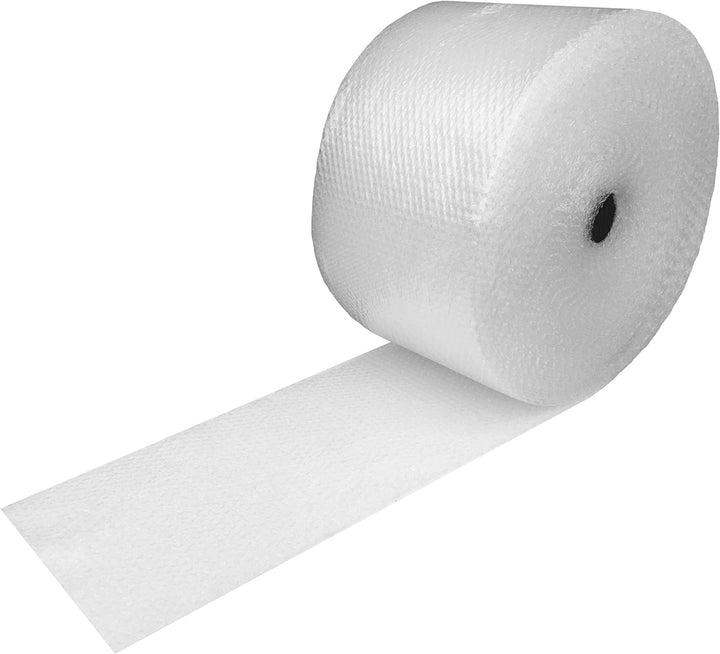
Bubble wrap consists of air-filled cells sealed between plastic layers. The trapped air helps absorb ordinary impacts, separate products and reduce direct contact with the walls of a shipping box.
Gpack Supplies offers retail and industrial bubble rolls in small, medium and large bubble profiles. Available widths include 12", 24" and 48", with roll lengths varying according to bubble size and product format.
Small bubbles provide flexible surface coverage and are useful for compact or delicate products. Medium bubbles provide balanced cushioning for general packing. Large bubbles create deeper cushioning and fill larger empty spaces.
Bubble wrap should be applied with the air cells facing the product in most cushioning applications. This allows the bubbles to conform around the item and provide direct impact protection.
Small, Medium and Large Bubble Wrap
| Bubble Size | Common Roll Length | Best Applications |
|---|---|---|
| Small 3/16" | 300' retail or 500' industrial | Electronics, glassware, cosmetics, small products and surface protection |
| Medium 5/16" | 188' retail or 375' industrial | General cushioning, appliances, décor and medium products |
| Large 1/2" | 125' retail or 250' industrial | Large products, void fill, furniture components and deeper cushioning |
Retail Bubble Rolls vs. Industrial Bubble Rolls
Retail bubble rolls are shorter and easier to store in small packing areas, retail stores, moving trucks and low-volume e-commerce operations.
Industrial rolls contain more material and are intended for warehouses, fulfillment centers, manufacturers and businesses with recurring packaging volume.
Both formats are available in several widths. Twelve-inch rolls are practical for smaller products, 24-inch rolls provide broader coverage and 48-inch rolls reduce the number of passes needed for large merchandise.
Industrial rolls may require more floor space, roll stands or cutting equipment for efficient use.
How to Wrap Products with Bubble Wrap
- Select the bubble profile according to product fragility and weight.
- Place the bubble side toward the product.
- Cover every exposed surface and corner.
- Add additional layers around fragile sections.
- Secure the wrap with packing tape without placing adhesive directly on delicate surfaces.
- Place the wrapped product in a suitable corrugated box.
- Fill remaining empty spaces with paper, foam or additional bubble wrap.
- Confirm that the product cannot move when the box is gently shaken.
- Seal the carton and apply the required shipping labels.
Foam Rolls for Non-Abrasive Surface Protection
Polyethylene foam rolls provide soft, lightweight and non-abrasive protection for products with delicate finishes. Foam is commonly used for polished metal, glass, furniture, painted surfaces, electronics, mirrors and finished components.
Gpack Supplies offers 1/4-inch foam rolls in multiple widths and 1/32-inch foam for lighter interleaving and surface protection.
Available widths include 12", 24", 36" and large slit-roll formats. Commercial bundle quantities vary according to width and roll length.
Foam provides excellent surface protection but may offer less deep impact absorption than large-bubble cushioning. Fragile products may require foam directly against the surface and bubble wrap outside the foam layer.
1/32-Inch vs. 1/4-Inch Foam Rolls
| Foam Thickness | Primary Benefit | Typical Applications |
|---|---|---|
| 1/32" | Thin interleaving and scratch protection | Plates, metal parts, glass, frames and finished surfaces |
| 1/4" | Thicker cushioning and surface protection | Furniture, electronics, mirrors, appliances and delicate components |
Bubble Wrap vs. Foam Rolls
| Feature | Bubble Wrap | Foam Rolls |
|---|---|---|
| Impact cushioning | Higher, depending on bubble profile | Moderate |
| Surface protection | Good | Excellent for delicate finishes |
| Bulk and thickness | Higher | Lower and more compact |
| Best use | Fragile products and void fill | Polished, painted and scratch-sensitive products |
Kraft Paper Rolls for Wrapping and Void Fill
Kraft paper rolls provide an economical and recyclable packaging option for wrapping products, filling empty carton space, separating layers and protecting surfaces.
Available kraft paper sizes include 24" x 720', 36" x 720' and 48" x 560'. Roll weights vary according to width and construction.
Narrow rolls are convenient for packing stations and small products. Wider rolls are useful for furniture, large merchandise, pallet layers and industrial applications.
Kraft paper can be crumpled to create void fill, folded to separate items or wrapped around products before they are placed inside a box.
Newsprint Packing Paper Sheets
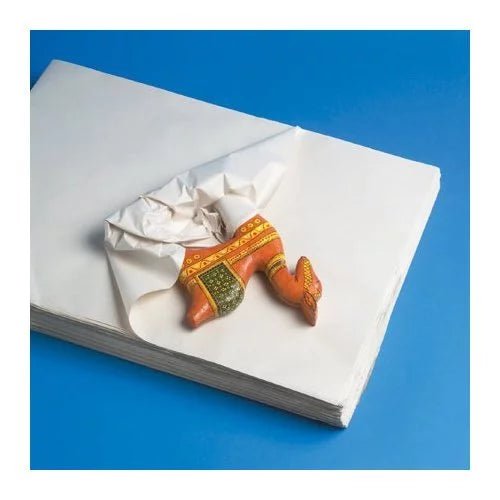
Newsprint packing paper provides a clean, ink-free wrapping material for dishes, glassware, household products, décor, small parts and moving applications.
The 24" x 36" sheets are supplied in 25 lb bundles and are easy to fold, crumple and layer.
Newsprint paper is especially useful when printed newspaper ink could transfer onto clean or delicate products.
Several sheets can be layered around fragile items, while crumpled sheets can fill small gaps inside moving boxes.
Kraft Paper vs. Newsprint Packing Paper
Kraft paper is stronger and better suited to general wrapping, heavy void fill, furniture and warehouse packaging.
Newsprint paper is softer, lighter and convenient for dishes, glassware and smaller household products.
Kraft rolls are better for continuous high-volume dispensing, while newsprint sheets are ready to use individually at moving and packing stations.
Both materials can be combined with bubble wrap or foam when additional impact protection is required.
Styrofoam Packing Peanuts for Void Fill
Packing peanuts are lightweight loose-fill materials designed to occupy empty spaces inside shipping boxes.
The 20-cubic-foot format supports warehouses, e-commerce businesses and commercial packing operations that ship irregular or lightweight products.
Packing peanuts flow around unusual shapes and help reduce product movement inside the carton.
They should not be used as the only protection for heavy products because dense merchandise may settle through the loose fill and contact the bottom or walls of the box.
How to Use Packing Peanuts Correctly
- Place a layer of peanuts in the bottom of the box.
- Wrap fragile merchandise before placing it inside.
- Center the product away from the carton walls.
- Fill all spaces around the product.
- Add peanuts above the product until the carton is slightly overfilled.
- Close the flaps and confirm that the material compresses enough to limit movement.
- Seal the box securely with packing tape.
Corrugated Rolls for Flexible Surface Protection
Singleface corrugated rolls combine a kraft liner with an exposed fluted layer. The flexible construction wraps around furniture, metal parts, glass, machinery, frames and irregular products.
Gpack Supplies offers 250-foot corrugated rolls in widths including 48", 60" and 72".
Corrugated rolls provide lightweight cushioning, abrasion protection and separation between products. They can also protect floors and work surfaces during moving or installation.
The fluted side can absorb ordinary impacts, while the kraft liner creates a more continuous exterior surface.
Corrugated Sheets for Layering and Pallet Protection
Corrugated sheets provide flat protection between pallet layers, under products, inside cartons and across exposed surfaces.
This collection includes single wall 40" x 48" sheets and double wall 60" x 108" sheets.
Single wall sheets are practical for general separation and pallet layering. Double wall sheets provide greater rigidity for heavy or demanding applications.
Sheets can be cut into pads, dividers and custom protective panels according to the product dimensions.
Corrugated Rolls vs. Corrugated Sheets
Corrugated rolls are flexible and better for wrapping curved, long or irregular products.
Corrugated sheets are rigid and better for layering, flat separation, pallet pads and reinforcement.
Rolls can be cut to custom lengths directly from a packing station. Sheets provide ready-made flat protection and are easier to stack.
Some products benefit from a corrugated sheet underneath and flexible corrugated roll material around the sides.
Corner Edge Protectors for Pallets, Boxes and Freight
Corner edge protectors reinforce carton corners, distribute stretch-film and strapping tension and improve pallet stability.
Gpack Supplies offers 2" x 2" edge protectors in lengths including 36", 48", 60" and 72".
Edge protectors are commonly placed vertically along pallet corners before stretch wrap or strapping is applied.
They help reduce carton crushing, protect product edges and improve load alignment during storage and transportation.
How to Use Corner Edge Protectors
- Square and stabilize the pallet load.
- Select an edge-protector length appropriate for the load height.
- Place protectors along vulnerable vertical corners.
- Use a light stretch-film pass to hold them in position.
- Apply the remaining stretch wrap around the pallet.
- Add strapping over the protectors when required.
- Confirm that straps do not cut directly into carton edges.
- Inspect the finished load before forklift movement.
Moving Blankets for Furniture and Equipment Protection
Moving blankets provide reusable padding for furniture, appliances, office equipment and large household products.
They help reduce scratches, rubbing and ordinary impact during loading, transportation and storage.
Blankets can be secured with stretch wrap, bands or moving straps. Avoid placing tape directly on finished furniture surfaces.
Moving blankets should remain clean and dry to prevent transferring dirt, moisture or odors onto furniture.
Plastic Furniture Covers for Moving and Storage
Plastic furniture covers protect sofas, chairs and upholstered products from dust, dirt and light moisture during moving and storage.
Available products include a sofa and box cover measuring approximately 92" x 42" x 62" in 4-mil material and a chair protector measuring approximately 64" x 42" x 34".
Covers should be placed over clean, dry furniture. Trapped moisture can create odor, mildew or surface problems during long-term storage.
For transportation, combine plastic covers with moving blankets, foam or corner protection when impact and abrasion are possible.
Thermal Bubble Rolls for Insulated Packaging
Insulated thermal bubble rolls combine reflective material with air-filled cushioning to help slow heat transfer.
The Cool Shield roll in this collection measures approximately 48" x 300' with 3/16-inch small bubble construction.
Thermal bubble material can be used to line boxes, wrap temperature-sensitive products and create lightweight insulated packaging.
Reflective insulation does not actively cool the product. Gel packs, refrigerated products or other conditioned materials may be required.
Gel Ice Packs for Cold-Chain Packaging
Gel packs provide cooling mass inside insulated shipping systems. Available sizes include 8 oz, 16 oz, 24 oz and 32 oz formats.
Smaller packs are useful for compact products and mailers. Larger packs provide more cooling capacity for bigger boxes and longer transportation times.
The correct quantity depends on product temperature requirements, outside temperature, transit time, box size and insulation performance.
Temperature-sensitive shipments should be tested under representative conditions before regular commercial use.
Gel Pack Sizes Available
| Gel Pack Size | Case Quantity | Typical Applications |
|---|---|---|
| 8 oz | 80 per case | Small insulated mailers, cosmetics and samples |
| 16 oz | 40 per case | Medium cold-chain boxes and food shipments |
| 24 oz | 24 per case | Larger insulated cartons and longer routes |
| 32 oz | 21 per case | Heavy-duty cold packaging and large shipments |
How to Build a Protective Shipping System
- Select a corrugated box appropriate for the product weight and dimensions.
- Place cushioning material in the bottom of the carton.
- Wrap delicate surfaces with foam or newsprint paper.
- Add bubble wrap around fragile products.
- Use corrugated pads or dividers between multiple items.
- Place the product near the center of the box.
- Fill empty spaces with kraft paper, peanuts or bubble wrap.
- Keep the product away from all carton walls.
- Close the flaps without excessive pressure.
- Seal the box with suitable packing tape.
- Apply handling and shipping labels.
- Test representative shipments before high-volume use.
Protective Packaging for Palletized Loads
Palletized loads may require corrugated sheets between layers, corner edge protectors, stretch film and strapping.
Corrugated pads help separate carton layers and reduce direct contact with the pallet surface.
Edge protectors reinforce the corners and distribute tension from stretch wrap and strapping.
Stretch wrap contains the wider pallet surface, while strapping provides concentrated load restraint.
Heavy or unstable freight should be evaluated as a complete load rather than relying on one protective material.
Protective Packaging for Moving and Storage
Moving and storage applications commonly use newsprint paper, bubble wrap, foam rolls, moving blankets, furniture covers and corrugated rolls.
Wrap dishes and glassware individually with newsprint or bubble wrap. Use small boxes for dense products and larger cartons for lightweight goods.
Cover furniture with moving blankets before applying stretch film. Add plastic covers when dust and light moisture protection are needed.
Store finished boxes and furniture above the floor in clean, dry spaces with adequate ventilation.
Common Protective Packaging Problems
Products Move Inside the Box
The carton may be oversized or may not contain enough void fill around the product.
Fragile Products Break
The cushioning may be too thin, compressed by product weight or missing around corners and edges.
Surfaces Arrive Scratched
Rough packaging may have been placed directly against polished or painted surfaces. Add foam or a soft protective layer.
Bubble Wrap Deflates
Sharp edges, excessive compression or damaged material can puncture the air cells.
Packing Peanuts Settle
Loose fill can shift during transportation. Use enough material and combine it with wrapped product protection.
Carton Corners Crush
Excessive stretch-wrap or strapping tension may require stronger boxes and corner protectors.
Cold Products Warm Too Quickly
The package may need more insulation, additional gel packs, shorter transit time or a different packaging configuration.
Best Practices for Cushioning and Protective Packaging
- Match the material to product fragility and weight.
- Use foam against scratch-sensitive surfaces.
- Use bubble wrap for impact protection.
- Use kraft paper and peanuts to fill empty spaces.
- Keep fragile products away from carton walls.
- Cover sharp edges before applying plastic cushioning.
- Use corrugated sheets between pallet layers.
- Place edge protectors beneath stretch wrap and strapping.
- Use moving blankets beneath plastic furniture covers.
- Keep protective materials clean and dry.
- Do not overcompress cushioning materials.
- Test temperature-sensitive packaging before shipping.
- Inspect completed packages before carrier pickup.
- Standardize packing procedures for recurring products.
How to Store Protective Packaging Materials
Store bubble wrap, foam, plastic covers and thermal materials away from direct sunlight, excessive heat, open flames and sharp warehouse equipment.
Keep kraft paper, newsprint, corrugated sheets and edge protectors in a dry area away from leaks, wet floors and high humidity.
Large rolls should be placed in racks, dispensers or designated floor locations where they will not block aisles.
Do not place heavy pallets or merchandise on top of bubble rolls, foam rolls or gel-pack cases.
Organize inventory by material type, dimensions, thickness and case quantity.
Industries That Use Protective Packaging Supplies
- E-commerce fulfillment operations
- Warehouses and distribution centers
- Moving and storage companies
- Furniture and appliance businesses
- Electronics manufacturers
- Automotive parts suppliers
- Glass and mirror companies
- Art galleries and frame shops
- Food and beverage distributors
- Pharmaceutical and medical suppliers
- Cosmetic and skincare brands
- Industrial manufacturers
- Freight and logistics companies
- Retail stores
- Third-party logistics providers
- Import and export operations
- Commercial packing departments
Frequently Asked Questions About Cushioning and Protective Packaging
What protective packaging products does Gpack Supplies offer?
Gpack Supplies offers bubble wrap, foam rolls, kraft paper, newsprint sheets, packing peanuts, corrugated rolls, corrugated sheets, edge protectors, furniture covers, moving blankets, thermal bubble material and gel packs.
What is bubble wrap used for?
Bubble wrap is used for impact cushioning, surface protection, product separation and void fill.
What bubble sizes are available?
Available profiles include small 3/16-inch, medium 5/16-inch and large 1/2-inch bubbles.
What is small bubble wrap best for?
Small bubble wrap is best for compact products, electronics, glassware and surface protection.
What is medium bubble wrap best for?
Medium bubble wrap provides balanced cushioning for general packaging and medium-size products.
What is large bubble wrap best for?
Large bubble wrap provides deeper cushioning and fills larger empty spaces.
Should the bubbles face the product?
Yes. In most cushioning applications, the bubble side should face the product.
What is the difference between retail and industrial bubble rolls?
Retail rolls are shorter and easier to handle, while industrial rolls contain more material for high-volume operations.
What are foam rolls used for?
Foam rolls protect painted, polished, glass and scratch-sensitive surfaces.
What foam thicknesses are available?
This collection includes 1/32-inch and 1/4-inch foam rolls.
Is foam better than bubble wrap?
Foam is better for non-abrasive surface protection, while bubble wrap generally provides deeper impact cushioning.
Can foam and bubble wrap be used together?
Yes. Foam can protect the surface while bubble wrap provides additional impact cushioning.
What are kraft paper rolls used for?
Kraft paper is used for wrapping products, cushioning, void fill and separating merchandise.
What kraft paper widths are available?
Available widths include 24, 36 and 48 inches.
What are newsprint packing sheets used for?
Newsprint sheets are used for dishes, glassware, household items and moving applications.
Do newsprint packing sheets contain ink?
The listed packing sheets are unprinted, reducing the risk of ink transfer.
What are packing peanuts used for?
Packing peanuts fill empty space around lightweight and irregular products.
Can packing peanuts protect heavy products?
They should not be the only protection for heavy products because the item may settle through the loose fill.
What is a corrugated roll?
A corrugated roll is flexible singleface kraft material used to wrap and protect irregular products and surfaces.
What corrugated roll widths are available?
Available widths include 48, 60 and 72 inches in 250-foot rolls.
What are corrugated sheets used for?
Corrugated sheets are used for pallet layering, product separation, reinforcement and surface protection.
What is the difference between corrugated rolls and sheets?
Rolls are flexible for wrapping, while sheets provide flat and more rigid protection.
What are corner edge protectors used for?
They reinforce corners, distribute strapping tension and improve pallet stability.
What edge-protector lengths are available?
Available lengths include 36, 48, 60 and 72 inches.
Can edge protectors prevent boxes from crushing?
They help distribute pressure, but the boxes and pallet load must also have adequate strength.
What are moving blankets used for?
Moving blankets protect furniture, appliances and equipment from scratches and impacts.
What are furniture covers used for?
Furniture covers protect sofas, chairs and upholstered products from dust, dirt and light moisture.
Should furniture be dry before covering?
Yes. Cover only clean and dry furniture to reduce trapped moisture and odor problems.
What is thermal bubble insulation?
Thermal bubble material combines reflective layers with air-filled cushioning to slow heat transfer.
Does thermal bubble material keep products cold by itself?
No. It slows heat transfer but may require gel packs or another cooling source.
What gel-pack sizes are available?
Available sizes include 8 oz, 16 oz, 24 oz and 32 oz.
How many gel packs should I use?
The quantity depends on product temperature, package size, insulation, transit time and outside conditions.
Can gel packs freeze products?
Direct contact with frozen packs can damage products sensitive to freezing, so separation may be required.
How do I know if I have enough cushioning?
The product should remain centered and should not move when the closed box is gently shaken.
Should fragile products touch the box walls?
No. Maintain cushioning between fragile products and every carton wall.
Does Gpack Supplies sell protective packaging in commercial quantities?
Yes. Gpack Supplies offers rolls, bundles, sheets and cases for warehouses, moving companies and commercial shipping operations.
Is local pickup available in Miami?
Local pickup and fast delivery options available in Miami and Broward.
Materiales de protección y amortiguación para empaque y envíos
Los materiales de protección ayudan a reducir golpes, movimiento, rayones, abrasión y daños durante envíos, almacenamiento, mudanzas y operaciones de almacén.
Gpack Supplies ofrece bubble wrap, foam rolls, kraft paper, newsprint packing paper, packing peanuts, corrugated rolls, corrugated sheets, corner edge protectors, moving blankets, furniture covers, thermal bubble insulation y gel packs.
Principales materiales disponibles
- Bubble wrap de burbuja pequeña, mediana y grande
- Foam rolls de 1/32" y 1/4"
- Kraft paper rolls de 24", 36" y 48"
- Newsprint packing paper de 24" x 36"
- Packing peanuts para rellenar espacios
- Corrugated rolls de 48", 60" y 72"
- Corrugated sheets single wall y double wall
- Corner edge protectors para pallets y cajas
- Moving blankets y cubiertas para muebles
- Thermal bubble rolls y gel ice packs
La burbuja pequeña de 3/16" es útil para productos compactos y protección de superficies. La burbuja mediana de 5/16" ofrece amortiguación general. La burbuja grande de 1/2" proporciona protección más profunda y rellena espacios grandes.
El foam es ligero, limpio y no abrasivo. Es ideal para muebles, vidrio, metal pulido, electrónicos, espejos y productos pintados.
El kraft paper y el newsprint paper pueden envolver productos y rellenar espacios dentro de cajas. Los packing peanuts se acomodan alrededor de productos irregulares.
Los corrugated rolls son flexibles para envolver muebles, maquinaria y piezas de formas irregulares. Las corrugated sheets son mejores para separar capas y reforzar pallets.
Los corner protectors distribuyen la presión del stretch wrap y el strapping, ayudando a reducir daños en las esquinas de cajas y pallets.
Las moving blankets protegen muebles y electrodomésticos contra golpes y rayones. Las cubiertas plásticas ayudan a proteger contra polvo, suciedad y humedad ligera.
Los thermal bubble rolls ayudan a reducir la transferencia de calor. Los gel packs de 8, 16, 24 y 32 oz pueden utilizarse dentro de sistemas de empaque aislados.
Para empacar correctamente, coloque protección en el fondo de la caja, envuelva el producto, rellene todos los espacios vacíos y mantenga los artículos frágiles separados de las paredes del cartón.
Local pickup and fast delivery options available in Miami and Broward.