
Colección: Bolsas de envío: transparentes, con cremallera, con burbujas y con fuelle
Bolsas de polietileno de baja densidad (LDPE) para envío y almacenamiento: transparentes, con burbujas y con cierre.
Descubra nuestra gama completa de bolsas de plástico para comercio electrónico, almacenes y comercio minorista: bolsas de polietileno transparente, con acolchado de burbujas, con cremallera, abiertas, con fuelle y sobres para listas de empaque. Resistentes, conformes a las normas y disponibles en cajas a granel.
Comprar por tipo
- Bolsas de polietileno transparentes con advertencia de asfixia : embalaje minorista que cumple con las normas de seguridad
- Bolsas con cierre resellable : almacenamiento y organización resellables
- Bolsas de burbujas : protección acolchada para artículos frágiles
- Bolsas abiertas y con fuelle : para productos más grandes o irregulares
- Sobres para listas de embalaje : fundas adhesivas para documentos
Características principales
- Materiales: polietileno transparente LDPE/HDPE, película acolchada con burbujas y fundas para documentos
- Cierres: Solapa autosellada, cremallera (zip-lock), extremo abierto, fuelle
- Opciones de grosor: común de 1,5 a 6 milésimas de pulgada (varía según el tipo y tamaño de la bolsa)
- Cumplimiento: Opciones de advertencia de asfixia para requisitos de comercios minoristas y mercados
- Paquetes a granel: Múltiples tamaños y cantidades de caja disponibles
Bolsas plásticas LDPE para envíos y almacenamiento: bolsas transparentes, bolsas burbuja, bolsas con cierre tipo zipper, bolsas abiertas con fuelle y sobres porta-documentos. Resistentes, seguras y disponibles en empaques a granel para e-commerce, almacenes y retail. Compra tus bolsas de polietileno en Gpack Supplies con entrega rápida en Miami y envíos nacionales.

-
Poly Bags Clear Self Seal with Suffocation Warning 1.5mil
Precio habitual A partir de $35.00 USDPrecio habitual -
Poly Bags Clear Self Seal with Suffocation Warning 1.5 Mil – 6 x 9 – 1000 Case
Precio habitual $35.00 USDPrecio habitual -
Poly Bags Clear Self Seal with Suffocation Warning 1.5 Mil – 6 x 9 – 2000 Case
Precio habitual $65.00 USDPrecio habitual -
Poly Bags Clear Self Seal with Suffocation Warning 1.5 Mil – 8 x 10 – 1000 Case
Precio habitual $45.00 USDPrecio habitual -
Poly Bags Clear Self Seal with Suffocation Warning 1.5 Mil – 8 x 10 – 2000 Case
Precio habitual $85.00 USDPrecio habitual -
Poly Bags Clear Self Seal with Suffocation Warning 1.5mil 9 x 12 1000 case
Precio habitual $50.00 USDPrecio habitual -
Poly Bags Clear Self Seal with Suffocation Warning 1.5 Mil – 9 x 12 – 2000 Case
Precio habitual $95.00 USDPrecio habitual -
Poly Bags Clear Self Seal with Suffocation Warning 1.5mil 10x12" 2000/case
Precio habitual $118.00 USDPrecio habitual -
Poly Bags Clear Self Seal with Suffocation Warning 1.5mil 10x15" 500/cs
Precio habitual $65.00 USDPrecio habitual -
Poly Bags Clear Self Seal with Suffocation Warning 1.5 Mil – 12 x 15 – 500 Case
Precio habitual $45.00 USDPrecio habitual -
Poly Bags Clear Self Seal with Suffocation Warning 1.5 Mil – 12 x 15 – 1000 Case
Precio habitual $95.00 USDPrecio habitual -
Poly Bags Clear Self Seal with Suffocation Warning 1.5 Mil – 12 x 17 – 500 Case
Precio habitual $55.00 USDPrecio habitual -
Poly Bags Clear Self Seal with Suffocation Warning 1.5 Mil – 12 x 17 – 1000 Case
Precio habitual $105.00 USDPrecio habitual -
Poly Bags Clear Self Seal with Suffocation Warning 1.5 Mil – 14 x 20 – 500 Case
Precio habitual $60.00 USDPrecio habitual -
Poly Bags Clear Self Seal with Suffocation Warning 1.5 Mil – 14 x 20 – 1000 Case
Precio habitual $110.00 USDPrecio habitual -
Poly Bags Clear Self Seal with Suffocation Warning 1.5mil 19x24" 500/cs
Precio habitual $90.00 USDPrecio habitual -
Bubble Out Bags Self Seal
Precio habitual A partir de $70.00 USDPrecio habitual -
Bubble Out Bags Self Seal 4 x 5.5 1500 Case
Precio habitual $95.00 USDPrecio habitual -
Bubble Out Bags 4 x 7.5 Self Seal – 1100 Case
Precio habitual $85.00 USDPrecio habitual -
Bubble Out Bags – 6 x 8.5 in – Self Seal – 650 Case
Precio habitual $95.00 USDPrecio habitual -
Bubble Out Bags 7 x 8.5 Self Seal – 550 Case
Precio habitual $95.00 USDPrecio habitual -
Bubble Out Bags 7 x 11.5 Self Seal – 400 Case
Precio habitual $95.00 USDPrecio habitual -
Bubble Out Bags 8 x 11.5 Self Seal – 350 Case
Precio habitual $75.00 USDPrecio habitual -
Bubble Out Bags Self Seal 8 x 15.5 300 Case
Precio habitual $95.00 USDPrecio habitual



Plastic Bags for Packaging, Storage, Retail and Warehouse Organization
Plastic bags provide flexible and efficient packaging for apparel, hardware, components, replacement parts, electronics, printed materials, retail products and warehouse inventory. Different bag styles provide different combinations of visibility, protection, closure, thickness and usable interior capacity.
Gpack Supplies offers a broad selection of self-seal poly bags, bubble-out bags, reclosable zip-top bags, open-end poly bags and gusseted polypropylene bags. These options support e-commerce fulfillment, manufacturing, retail packaging, inventory control and industrial distribution.
Available products include lightweight 1.5-mil self-sealing bags with printed suffocation warnings, bubble-cushioned bags for delicate merchandise, reclosable bags in multiple sizes, heavy-duty 4-mil open-end bags and gusseted bags for bulky or irregular products.
Selecting the correct plastic bag requires reviewing the product dimensions, thickness, weight, sharp edges, closure requirements and desired presentation. Flexible bags should not replace rigid boxes when products can crush, bend, break or puncture the packaging.
Types of Plastic Bags Available from Gpack Supplies
| Bag Type | Construction | Best Applications |
|---|---|---|
| Self-seal poly bags | Clear polyethylene with peel-and-seal adhesive flap | Apparel, textiles, retail products and e-commerce packaging |
| Bubble-out bags | Bubble cushioning with outward-facing air cells and self-seal closure | Electronics, parts, glass, polished products and delicate surfaces |
| Reclosable bags | Clear plastic with reusable zip-top closure | Hardware, components, samples, inventory and small products |
| Open-end poly bags | Clear polyethylene with an open top requiring separate closure | Industrial products, liners, parts and heavy-duty storage |
| Gusseted polypropylene bags | Clear polypropylene with expandable side or bottom gussets | Bulky products, containers, gift items and retail presentation |
Clear Self-Seal Poly Bags with Suffocation Warning
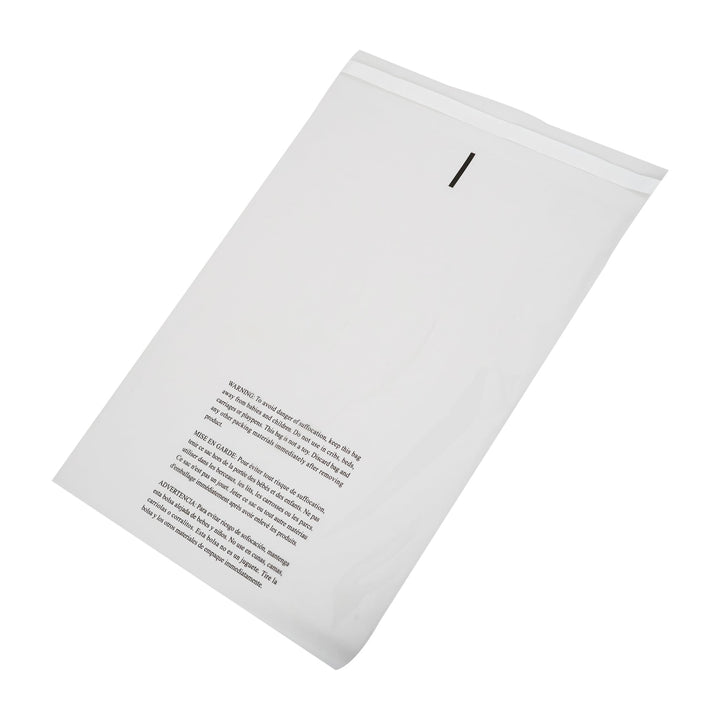
Clear self-seal poly bags provide fast packaging for apparel, textiles, soft goods, retail merchandise and e-commerce orders. The peel-and-seal adhesive flap allows employees to close the bag without applying separate packing tape.
The transparent film keeps products visible for inventory control, barcode scanning and customer presentation. Available bags in this collection include printed suffocation warnings for selected retail and fulfillment applications.
The listed bags use 1.5-mil polyethylene film, offering lightweight protection from ordinary dust, dirt and moisture during storage and handling.
Suffocation-warning requirements can vary according to bag dimensions, product type, marketplace, destination and applicable laws. Businesses remain responsible for confirming that the warning language and packaging comply with their specific requirements.
Self-Seal Poly Bag Sizes Available
| Bag Size | Thickness | Case Quantity | Typical Applications |
|---|---|---|---|
| 12" x 17" | 1.5 mil | 500 or 1,000 | Shirts, clothing, textiles and medium retail products |
| 14" x 20" | 1.5 mil | 500 or 1,000 | Jackets, folded apparel, bedding and larger soft goods |
| 19" x 24" | 1.5 mil | 500 | Large apparel, blankets and bulky lightweight products |
Benefits of Self-Sealing Plastic Bags
Fast Peel-and-Seal Closure
The adhesive flap reduces the need for separate tape, staples or heat-sealing equipment in many packaging operations.
Clear Product Visibility
Transparent film allows employees and customers to identify the product without opening the bag.
Lightweight Packaging
Thin polyethylene adds little weight or bulk to apparel, textiles and retail merchandise.
Protection from Dust and Handling
The sealed bag helps protect merchandise from ordinary dust, dirt and moisture during warehouse storage and fulfillment.
Printed Safety Warning
Selected bags include printed warning text intended for products and sales channels where a suffocation notice is required.
Bubble-Out Self-Seal Bags for Surface Protection
Bubble-out bags provide built-in cushioning for products that need protection from abrasion, scratches and ordinary impacts. The bubble cells face outward, while the smoother interior surface contacts the product.
This construction is useful for polished metal, electronics, glass, lenses, hardware, automotive components, instruments and finished products.
The self-sealing flap helps close the protective bag quickly without requiring separate tape in many applications.
Bubble-out bags provide flexible cushioning but do not offer the rigid protection of a corrugated shipping box. Fragile or high-value products may need to be placed inside a suitable box after bagging.
Bubble-Out Bag Sizes Available
| Bag Size | Case Quantity | Typical Uses |
|---|---|---|
| 4" x 5.5" | 1,500 | Small components, jewelry, hardware and compact parts |
| 4" x 7.5" | 1,100 | Long narrow components and accessories |
| 6" x 8.5" | 650 | Electronics, parts and small finished products |
| 7" x 8.5" | 550 | Medium components and delicate accessories |
| 7" x 11.5" | 400 | Tools, instruments and longer components |
| 8" x 11.5" | 350 | Electronics, books and medium products |
| 8" x 15.5" | 300 | Long parts, equipment and industrial components |
| 8" x 17.5" | 250 | Elongated products and assemblies |
| 10" x 15.5" | 250 | Larger electronics and finished products |
| 12" x 11.5" | 250 | Wide components and flat products |
| 12" x 15.5" | 200 | Large parts and industrial products |
| 15" x 17.5" | 150 | Large equipment, panels and fragile merchandise |
| 12" x 23.5" | 150 | Long industrial components and assemblies |
Bubble-Out Bags vs. Standard Bubble Bags
Bubble-out bags place the air cells on the exterior and provide a smoother interior surface against the packaged product.
This can help reduce impressions and rubbing against polished, painted, coated or delicate product surfaces.
Standard bubble bags may place the bubbles toward the product depending on their construction. That format can provide direct cushioning but may be less suitable for highly sensitive finishes.
The appropriate orientation depends on the product, surface finish and required impact protection.
Reclosable Zip-Top Plastic Bags
Reclosable bags use an interlocking top closure that can be opened and closed repeatedly. They are useful for products that require ongoing access, inventory counting or customer reuse.
Common applications include screws, bolts, washers, electronic parts, samples, jewelry, craft supplies, repair kits, labels and instruction materials.
Clear film allows contents to remain visible, helping employees identify parts without opening every package.
Reclosable bags are not automatically suitable for liquids, food, hazardous materials or sterile products. Compatibility must be confirmed for the specific application.
Reclosable Bag Sizes Available
| Bag Size | Count | Typical Applications |
|---|---|---|
| 4" x 6" | 1,000 | Small hardware, jewelry, samples and components |
| 6" x 9" | 1,000 | Medium parts, kits and accessories |
| 8" x 10" | 1,000 | Documents, tools and retail products |
| 9" x 12" | 1,000 | Large parts, instructions and inventory kits |
| 12" x 15" | 1,000 | Apparel, large components and bundled products |
| 13" x 18" | 1,000 | Bulky products, textiles and warehouse kits |
Self-Seal Bags vs. Reclosable Bags
| Feature | Self-Seal Bags | Reclosable Bags |
|---|---|---|
| Closure | Peel-and-seal adhesive flap | Interlocking zip-top closure |
| Repeated opening | Generally intended for one primary closure | Can be opened and closed repeatedly |
| Best use | Retail presentation and fulfillment | Parts, inventory, kits and reusable storage |
| Tamper indication | Opening may disturb the adhesive flap | Standard closure does not show tampering |
Heavy-Duty Clear Open-End Poly Bags
Open-end poly bags provide flexible protection without an attached closure. Products are inserted through the open top, which may then be folded, taped, tied, stapled or heat sealed when compatible.
The 16" x 30" bag in this collection uses heavy-duty 4-mil film and is listed as an approximately 5-gallon format.
This thicker construction is useful for industrial parts, hardware, liners, components and products that may be too demanding for lightweight retail bags.
Sharp corners and heavy metal products can still puncture polyethylene. Cover exposed edges or use a rigid outer container when necessary.
Understanding Plastic Bag Thickness
Plastic bag thickness is commonly measured in mils. One mil equals one-thousandth of an inch.
1.5-Mil Bags
Lightweight 1.5-mil bags are suitable for apparel, textiles, retail merchandise and products without sharp edges.
2-Mil Bags
Two-mil bags provide additional strength for parts, hardware and general commercial use.
4-Mil Bags
Four-mil bags offer heavier construction for industrial products, tools, components and demanding storage applications.
Thickness alone does not determine complete performance. Resin type, seams, dimensions, load shape and manufacturing quality also affect bag strength.
Gusseted Polypropylene Bags
Gusseted bags include folds along the sides or bottom that expand when a product is inserted. This creates additional interior volume for bulky, square or irregular merchandise.
The 10" x 8" x 24" gusseted polypropylene bag in this collection uses 1.5-mil clear material and is supplied in cases of 1,000.
Polypropylene provides high clarity and a crisp professional appearance for retail products, gift items, containers, textiles and display packaging.
Gusset dimensions should be included when evaluating fit. The bag must accommodate the product width, depth and height without placing excessive stress on the seams.
Polyethylene vs. Polypropylene Bags
| Feature | Polyethylene Bags | Polypropylene Bags |
|---|---|---|
| Feel | Soft and flexible | Crisper and firmer |
| Clarity | Clear to slightly cloudy depending on formulation | High clarity for retail presentation |
| Flexibility | Higher | Lower and more rigid |
| Typical use | Shipping, storage, apparel and industrial packaging | Retail display, gift packaging and product presentation |
How to Choose the Correct Plastic Bag
Identify the Product
Determine whether the bag will hold apparel, hardware, electronics, printed materials, food, industrial parts or delicate merchandise.
Measure All Product Dimensions
Measure length, width and thickness. Bulky products may need a gusseted bag rather than a flat bag.
Select the Correct Thickness
Lightweight products can use thinner bags, while heavy or irregular products generally require thicker film.
Choose a Closure
Use self-seal bags for fast fulfillment, reclosable bags for repeated access and open-end bags when a custom closure method is needed.
Review Protection Requirements
Use bubble-out bags for products needing abrasion and cushioning protection.
Check Safety and Compliance Requirements
Confirm suffocation warnings, food-contact requirements, marketplace rules and any industry-specific packaging standards.
How to Measure a Product for a Flat Plastic Bag
- Measure the product width at its widest point.
- Measure the product length.
- Measure the product thickness or depth.
- Add the product depth to the required bag width.
- Add part of the depth to the required bag length.
- Allow extra length for the closure or flap.
- Confirm that the product enters without forcing the seams.
- Test the actual product inside a sample bag.
How to Measure for a Gusseted Bag
A gusseted bag is commonly described using width, gusset and length dimensions.
The flat width should accommodate the front of the product, while the gusset expands to fit its depth.
The bag length must cover the product height plus enough material for folding, tying, taping or sealing.
Test bulky products before ordering commercial quantities because gusset expansion changes the usable bag length.
How to Use a Self-Seal Poly Bag
- Select a bag large enough for the finished product.
- Inspect the film and seams for damage.
- Insert the product without forcing sharp edges against the bag.
- Remove unnecessary trapped air.
- Peel the release liner from the adhesive strip.
- Fold the flap evenly across the opening.
- Press the adhesive from one side to the other.
- Confirm that the complete closure is bonded.
- Apply product or shipping labels to a flat surface.
How to Use Reclosable Bags
- Select a bag appropriate for the product size and weight.
- Insert the product below the zipper area.
- Remove excess air when appropriate.
- Align both sides of the zip-top closure.
- Press from one end to the other.
- Check that the closure is completely engaged.
- Open the bag by pulling the two sides apart above the zipper.
- Replace bags that develop damaged closures or punctures.
How to Use Bubble-Out Bags
- Select a bag that fits without excessive empty space.
- Confirm that the smoother side faces the product.
- Insert the product carefully.
- Keep sharp edges from puncturing the bag.
- Remove the adhesive release liner.
- Fold and press the self-seal flap.
- Place the protected product inside a shipping box when rigid protection is required.
- Add void fill to prevent movement inside the outer carton.
Common Applications for Plastic Packaging Bags
- Apparel and clothing fulfillment
- Jewelry and accessories
- Hardware and fasteners
- Electronic components
- Automotive parts
- Industrial components
- Instruction manuals and documents
- Retail products and gift items
- Samples and promotional materials
- Repair kits and replacement parts
- Warehouse inventory organization
- Textiles and soft goods
- Cosmetic and personal-care products
- Craft and hobby supplies
- Shipping and e-commerce packaging
When to Use a Plastic Bag Instead of a Box
Plastic bags are suitable for products that are lightweight, flexible and not highly sensitive to crushing.
They use less storage space than assembled boxes and can reduce packaging weight for apparel, textiles and small components.
Bubble bags add cushioning but still do not offer rigid stacking protection.
Use a corrugated box when products are fragile, sharp, heavy, crush-sensitive or valuable.
Common Plastic Bag Packaging Problems
The Bag Is Too Tight
A tight bag strains the seams and closure and may tear around product corners.
The Adhesive Flap Opens
Dust, product pressure, wrinkles or insufficient contact can weaken the self-seal closure.
The Bag Punctures
Sharp edges, heavy products or insufficient film thickness can puncture plastic bags.
The Zip Closure Does Not Stay Closed
The bag may be overfilled, the zipper may be misaligned or debris may be trapped inside the closure.
The Product Moves Inside a Bubble Bag
Select a closer-fitting size or use additional packaging inside the shipping carton.
The Gusset Does Not Open Completely
The product may be too wide, or the gusset folds may be stuck together or incorrectly positioned.
Best Practices for Plastic Packaging Bags
- Measure the product before selecting the bag.
- Include product thickness when calculating bag size.
- Choose film thickness according to product weight and edges.
- Use bubble bags for delicate or abrasion-sensitive products.
- Do not overfill or stretch bag seams.
- Keep adhesive strips clean before sealing.
- Press self-seal closures across the complete width.
- Align reclosable zippers before pressing them closed.
- Use rigid boxes for crush-sensitive products.
- Protect sharp corners before bagging.
- Confirm suffocation-warning requirements.
- Verify material compatibility for food, liquids or chemicals.
- Test representative products before ordering large quantities.
- Inspect finished packages before shipment.
How to Store Plastic Bags
Store plastic bags in a clean, dry and covered warehouse area. Keep them inside their original cartons until needed.
Protect polyethylene, polypropylene and bubble products from direct sunlight, excessive heat, open flames and sharp equipment.
Avoid placing heavy merchandise on top of bag cases because pressure can damage closures, film edges and bubble cushioning.
Organize inventory by bag style, dimensions, thickness and case quantity.
Use older inventory before newly delivered cases and inspect stored bags for dust, adhesive contamination or deformation.
Frequently Asked Questions About Plastic Bags
What types of plastic bags does Gpack Supplies offer?
Gpack Supplies offers self-seal poly bags, bubble-out bags, reclosable bags, open-end poly bags and gusseted polypropylene bags.
What are self-seal poly bags used for?
They are commonly used for apparel, textiles, retail products and e-commerce fulfillment.
Do the self-seal bags include a suffocation warning?
Selected bags in this collection include printed suffocation-warning text.
Are suffocation-warning requirements the same everywhere?
No. Requirements may vary by destination, marketplace, product and applicable laws.
What thickness are the self-seal bags?
The listed self-seal poly bags use 1.5-mil film.
What is a bubble-out bag?
It is a protective bag with bubble cells facing outward and a smoother surface against the product.
What are bubble-out bags used for?
They protect electronics, parts, polished products and delicate surfaces from abrasion and ordinary impacts.
Do bubble-out bags replace shipping boxes?
Not for highly fragile or crush-sensitive products that require rigid protection.
Do bubble-out bags have a self-seal closure?
Yes. The listed bubble-out bags include a self-sealing flap.
What is a reclosable bag?
A reclosable bag has an interlocking zip-top closure that can be opened and closed repeatedly.
What reclosable bag sizes are available?
Available sizes include 4" x 6", 6" x 9", 8" x 10", 9" x 12", 12" x 15" and 13" x 18".
How many reclosable bags come in each case?
The listed reclosable bags are supplied in quantities of 1,000.
Can reclosable bags be reused?
They can be opened and closed repeatedly when the film and zipper remain undamaged.
Are reclosable bags waterproof?
Standard zip-top bags should not be considered completely waterproof or leak-proof.
What is an open-end poly bag?
It is a plastic bag without an attached closure that may be folded, taped, tied or sealed separately.
What thickness is the 16" x 30" open-end bag?
The listed clear open-end bag is 4 mil thick.
What is a gusseted bag?
A gusseted bag has expandable folds that create additional capacity for bulky or deep products.
What is the difference between polyethylene and polypropylene bags?
Polyethylene is softer and more flexible, while polypropylene is crisper and often provides greater visual clarity.
What does mil mean for plastic bags?
One mil equals one-thousandth of an inch and describes plastic-film thickness.
Is a 4-mil bag stronger than a 1.5-mil bag?
It is thicker, although final strength also depends on resin, seams, dimensions and product shape.
How do I choose the correct bag size?
Measure the product width, length and depth and allow additional material for insertion and closure.
Should plastic bags fit tightly?
No. Excessive tension can damage seams, closures and product corners.
Can sharp products be placed directly in poly bags?
Sharp edges should be covered or placed inside stronger packaging to prevent punctures.
Can plastic bags be used for food?
Only use bags specifically confirmed as suitable for the intended food-contact application.
Can these bags hold liquids?
Standard self-seal and reclosable bags should not be assumed leak-proof without product-specific confirmation.
Can labels be applied to plastic bags?
Yes. Apply pressure-sensitive labels to a clean, dry and flat section of the bag.
How should plastic bags be stored?
Store them in a cool, dry area away from sunlight, excessive heat, flames and sharp objects.
Does Gpack Supplies sell plastic bags by the case?
Yes. Gpack Supplies offers commercial case quantities in multiple styles and sizes.
Is local pickup available in Miami?
Local pickup and fast delivery options available in Miami and Broward.
Bolsas plásticas para empaque, almacenamiento y productos comerciales
Las bolsas plásticas permiten proteger, organizar y presentar ropa, piezas, accesorios, electrónicos, componentes y productos de almacén.
Gpack Supplies ofrece bolsas autoadhesivas, bubble-out bags, bolsas reclosable tipo zip-top, bolsas open-end y bolsas de polipropileno con gusset.
Tipos principales
- Bolsas clear self-seal con advertencia de asfixia
- Bubble-out bags para protección y amortiguación
- Bolsas reclosable para piezas y almacenamiento
- Bolsas open-end heavy-duty
- Bolsas gusseted para productos voluminosos
Las bolsas self-seal utilizan una solapa adhesiva para cerrar productos de ropa, textiles y mercancía de retail. Los modelos mostrados utilizan plástico de 1.5 mil.
Las bubble-out bags tienen las burbujas orientadas hacia la parte exterior y una superficie más lisa en contacto con el producto. Son útiles para electrónicos, piezas y superficies delicadas.
Las bolsas reclosable pueden abrirse y cerrarse varias veces. Son apropiadas para tornillos, componentes, muestras, kits, accesorios y productos de inventario.
Las bolsas open-end no incluyen cierre y pueden cerrarse con cinta, amarres, grapas o heat sealing cuando el material sea compatible.
Las bolsas gusseted se expanden en los lados o en el fondo para acomodar productos más anchos, profundos o voluminosos.
Para seleccionar el tamaño correcto, mida el ancho, largo y grosor del producto. No estire excesivamente las costuras ni coloque productos afilados directamente contra el plástico.
Confirme los requisitos de advertencia, food contact y regulaciones aplicables antes de utilizar una bolsa para una aplicación específica.
Local pickup and fast delivery options available in Miami and Broward.